Breaking Rules and a Bourbon Pecan Carrot Cake
Can we talk about cake today?
And can it be all about the cake and only about the cake?
I want to talk about cake the way that most people talk about the weather. I suppose we could talk about the weather if you insist, but I find cake to be infinitely more interesting, which makes it a far better distraction. And when I’m not distracted all I can think about is my friend Linda. She’s 400 miles away, but I know what she’s doing right now: she’s staring down at the swollen bandages wrapping her body where her breasts used to be. Fucking Cancer.
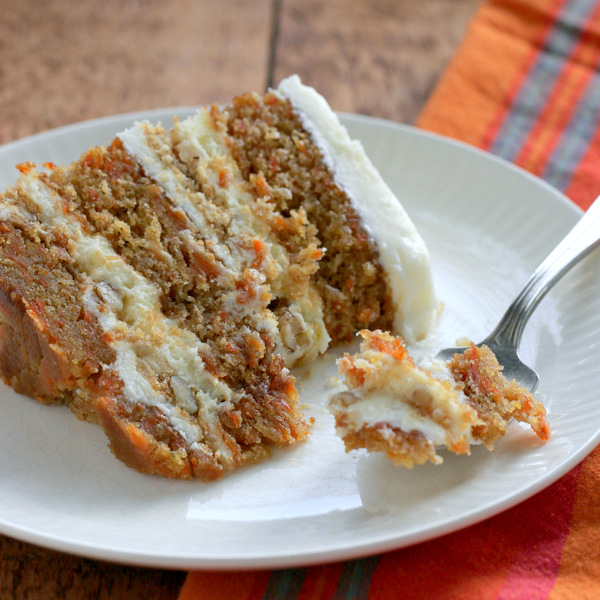
See? That’s why I have to talk about cake, why I NEED to talk about cake. This carrot cake is not your mother’s or your grandmother’s carrot cake though I suspect they would approve. From the assembly technique to the filling this is an unusual, but mighty fine specimen. The cake itself is moist, really moist and that gives it high marks on my list. For me, the worst cake, is a dry cake. Did I mention that the cake is soaked with bourbon? Bonus!
Linda likes cake, chocolate cake, the triple chocolate, death by chocolate kind of chocolate cake. When you go out to eat with Linda, she orders chocolate cake–as an appetizer. “Cake is way better than salad,” she will always say to the bewildered waiter taking our order. “Besides, I might be too full for dessert, and then I’d miss my chocolate cake.” Linda loves breaking life’s little unwritten rules, the very same rules that I always follow. And that’s one of the many things I love about her.
Do you know what I don’t love about Linda? That she’s battling breast cancer. Again. When I heard her cancer had returned after eight clean years, I stopped breathing. Suddenly I was 29 again and the woman on the end of the phone was my mom telling me that her cancer had returned. Mom promised me that she would be fine. She lied.
Right, so cake. Carrot cake. This one is a looker to be sure. It will elicit “oohs” and “ahhs” from impatient onlookers as you carefully unwrap it, revealing all ten, yes ten, layers. And then it will be quickly devoured before you can even snap a picture of the marvel in its entirety. In fact, had I not promised a slice to my neighbor, this post would be devoid of any cake picture at all. Just look at those layers would you. There’s the boozy cake, which I’ve already gushed about. Then there’s a little something called “liquid cheesecake”, followed by fistfuls of graham cracker crumbs and pecans and generous slathers of old school cream cheese frosting. Did I lose you at liquid cheesecake? Uh huh, I thought so. That’s what happened to me when I came across it for the first time in Christina Tosi’s Momofuku Milk Bar cookbook. She’s the same pastry genius behind the Compost Cookies that I’ve been raving about for two years. Like Linda, Christina Tosi is a rule breaker. She doesn’t even bake her layer cakes in round cake pans. Have you ever made a layer cake out of a cake baked in a 9×13 pan? I hadn’t until I came across Tosi’s recipe.
I’m going to make another cake today, a chocolate cake, the triple chocolate, death by chocolate kind of chocolate cake. Won’t Greg be surprised when I serve it up for dinner tonight? That’s right, we’re having cake for dinner rather than dessert. It’s about time I start breaking a few rules of my own don’t you think?
Thanks for dropping by and letting me talk about cake. It helps.
Bourbon Pecan Carrot Cake
The cake and liquid cheesecake recipes are adapted from Christina Tosi’s Momofuku Milk Bar. Experiment with your layers and fillings. Tosi’s original recipe uses a Graham Frosting in lieu of the cream cheese frosting used here. You can find a recipe for her frosting at TheLetMeEatCake.com.
Ingredients
THE CAKE:
-
1/2 cup unsalted butter, softened
1/2 cup light brown sugar, packed
1/2 cup granulated sugar
2 large eggs
1/4 cup vegetable oil
1 1/4 cups all purpose flour
1 teaspoon baking powder
1/4 teaspoon baking soda
3/4 teaspoon ground cinnamon
1 teaspoon salt
2 1/2 cups shredded carrots
THE SOAKER:
-
1/4 cup bourbon (or milk)
“LIQUID CHEESECAKE”:
-
8 ounces cream cheese, softened
2/3 cup granulated sugar
1 tablespoon cornstarch
1/2 teaspoon salt
2 tablespoons heavy cream or milk
1 large egg
CRUMBS:
-
1/2 cup graham cracker crumbs
1/2 cup pecans, toasted and coarsely chopped
1/2 teaspoon salt
1/4 teaspoon cinnamon
OLD SCHOOL CREAM CHEESE FROSTING:
-
1/2 cup unsalted butter, softened
8 ounces cream cheese, softened
1/2 teaspoon salt
2 1/4 cups powdered sugar
EQUIPMENT:
-
9×13-inch cake pan
small glass or ceramic baking dish (approximately 6×6-inches)
6 or 7-inch springform pan
Preparation
THE CAKE:
- Preheat oven to 350°F. Butter the bottom and sides of the 9×13-inch cake pan.
- Cream together the butter and sugars with an electric mixer on medium-high until smooth, about 2-3 minutes. Scrape down the bowl. Add the eggs and mix on medium-high for 3 minutes. Scrape down the sides of the bowl again. With the mixer on low, slowly add the oil. Increase the mixer speed to high and beat for 5 minutes, until the mixture is very light in color and nearly doubled in size. Scrape the sides of the bowl once more.
- In a medium bowl, whisk together flour, baking powder, baking soda, cinnamon, and salt. Add the dry ingredients to the wet ones. Mix on low until just blended. Fold in the grated carrots and spread the batter evenly in the prepared pan.
- Bake for 20-25 minutes, or until a toothpick inserted into the center of the cake comes out clean. Cool completely. Wrap in plastic and refrigerate until you’re ready to assemble the cake.
“LIQUID CHEESECAKE”:
- Preheat oven to 300°F.
- Cream together the cream cheese and the sugar with an electric mixer on medium speed for 2 minutes. Scrape down the bowl.
- In a separate bowl, whisk together the remaining ingredients until you have a homogeneous slurry. With the mixer on medium-low speed, add the slurry and mix for 3 minutes, until the mixture is smooth. Pour the batter into the small glass dish.
- Bake for 15-20 minutes, until the outsides are firm, but the insides are jiggly. Cool completely. Store in an airtight container and refrigerate until ready to use.
CRUMBS and FROSTING:
- For the crumbs, stir the ingredients together in a small bowl.
- For the frosting, beat together the butter, cream cheese and salt with an electric mixer. With the mixer on low speed, add the powdered sugar a cup at a time until smooth and silky.
READY, SET, GO:
- Invert the cake onto waxed paper or a piece of parchment. Use the springform pan to stamp out 1 circle and 2 half circles. The scraps will be the bottom layer of your cake. The half circles will be the middle layer. And the complete circle will be the top layer of the cake.
- Clean the springform pan. Line the inside with several 7-8-inch strips of parchment to support the height of the finished cake.
- Assemble the cake using the plan outlined below. Cover the cake and transfer to the freezer for 6 hours to set the filling. Remove from the freezer 3 hours before you plan to serve the cake. Release it from the spring form pan and carefully peel off the parchment paper. Slice and serve.
ASSEMBLY PLAN:
Top of Cake
1/3 Cream Cheese Frosting
Carrot cake circle
1/2 Liquid Cheesecake
1/2 Crumbs
1/3 Cream Cheese Frosting
Carrot cake semi-circles brushed with 1/2 the bourbon
1/2 Liquid Cheesecake
1/2 Crumbs
1/3 Cream Cheese Frosting
Carrot cake scraps brushed with 1/2 the bourbon
Bottom of Cake
Serves 8.
 If this carrot cake looks too daunting, try this Banana Cardamom Cake instead.
Accounting for Taste and a Chocolate Truffle Cake
“Tell me what you eat, and I will tell you what you are.”
~ Jean Anthelme Brillat-Savarin, The Physiology of Taste
I happen to love cardamom. You might even say I’m a bit infatuated with the deeply fragrant spice. My friend Lisa K. loves it too. We recently devoured a loaf of Finnish Cardamom Bread in twenty-four hours. Our skinny jeans screamed “no”, but shamefully our ardor for cardamom won out. Ever had cardamom in your coffee? Try it. It imparts a sweet, subtle woodsy note that I start thinking about the moment my eyes open in the morning. Another friend, who must remain anonymous, swears that I make the best coffee. I didn’t disclose my secret ingredient to her, because, well, she’s told me too many times that she hates cardamom. Hmmm.
My sister doesn’t think she likes cardamom. “But maybe I’m thinking of a different spice,” she said when she saw the disappointment on my face last December. Her uncertainty keeps her from trying any recipe that calls for enough cardamom to earn the spice a spot in the recipe title–like this cake. She also hates goat cheese and of this she is certain. Her husband hates it too. And so do their three adult children. Research suggests that there’s a genetic component to taste. Perhaps there’s a gene for liking goat cheese.
Why do we like what we like, and hate what we hate when it comes to food? This has always been a mystery to me. Does the answer lie in our taste buds, our gene pool, or our psyche? In his April 13, 2010 New York Times article, Harold McGee reported that our likes and dislikes are often a matter of experience:
“If the flavor doesn’t fit a familiar food experience, and instead fits into a pattern that involves chemical cleaning agents and dirt, or crawly insects, then the brain highlights the mismatch and the potential threat to our safety.”
This explains why cilantro is such a polarizing food. Even Julia Child hated the stuff that many haters claim tastes like soap. The good news is that those initial, negative impressions can be overcome if you don’t give up after the first attempt:
“every new experience causes the brain to update and enlarge its set of patterns, and this can lead to a shift in how we perceive a food.”
McGee’s article gave me hope for green peppers. I’ve hated them since I was a kid, but I make a point of trying them every now and again when they’re prepared in a way I’m not familiar with, forever optimistic that I’ll discover a means to mask their intense bitterness. This try and try again method worked for my husband Greg. He tried beets–a longstanding favorite of mine–on three separate occasions prepared three different ways without experiencing a love connection. He fell for them on his fourth try–my goat-cheese-hating sister’s blue ribbon pickled beets. Such persistence in the name of food is high on the list of reasons why I love that man. If only he would apply the same sensibility to eggs with runny yolks–the only food he still refuses to eat.
My childhood food nemesis was the onion. I hated onions even more than green peppers. My oldest sister (who happens to love goat cheese) hated onions too, and I cherished anything that bound us together. I still do. I reconciled with onions in my 30s by drawing a hot and cold line between those I’d eat and those I wouldn’t. Today, I can’t imagine cooking without onions, but please don’t ask me to sprinkle a handful of raw onions on my bratwurst. My sister’s hatred for onions runs deeper. Go ahead and cut her tomato with your tainted onion knife; I dare you. Fortunately, our connection runs deeper than a vegetable, and it’s strengthened by a shared love for she-crab soup, and of course goat cheese. I’ve long suspected it’s this very concept of connection that fuels the disdain my nieces feel towards goat cheese. The bond it secures between them and their dad likely warms their hearts in ways that even the most delicious cheese cannot.
So perhaps it’s not so much the physiology of taste at work, but rather the psychology of taste. We are what we eat in the physical sense, but we often define, even label, ourselves by the relationships we have with our food. Are the foods we love, hate, or avoid at all costs merely an expression of our individuality?
Take my friend Clark, The Man Who Wouldn’t Eat Vegetables. He hates–H.A.T.E.S.–vegetables, all vegetables, any shape, any color. He gestures wildly with his arms when he orders a chicken sandwich, “no garnish, no garnish.”
“I don’t eat vegetables,” I’ve heard Clark say countless times.
The person making the inquiry typically responds with disbelief naming all the vegetables they can think of, “Asparagus? Broccoli? Carrots? Lettuce…”
All the while Clark emphatically shakes his head “no” and ends with this, “Yes, really, I hate all vegetables, believe me, I’ve tried.”
Yet each time he repeats those last words, I detect a faint note of pride in his voice. For Clark, it’s not a matter of taste. It runs deeper than that. It’s a way of life–it’s who he is.
I may never understand how someone can despise all vegetables; how an entire family can detest a tangy cheese; or even why I adore cardamom. Unlike Jean Anthelme Brillat-Savarin, I cannot tell you who you are just by knowing what you eat. But then again, aren’t the mysteries in life what make it so interesting?
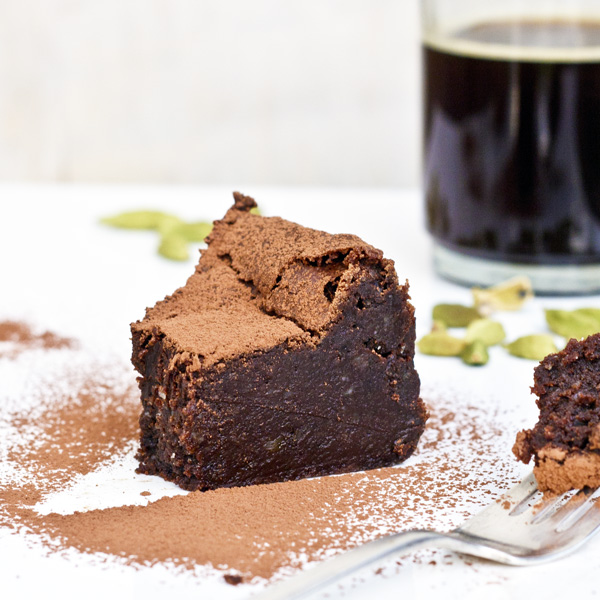
Chocolate Truffle Cake with Cardamom and Espresso
Adapted from Ottolenghi, The Cookbook by Sami Tamimi and Yotam Ottolenghi. Resist the urge to skimp on chocolate with this cake; use the best you can find. If you’re feeling particularly naughty, serve this up with a scoop of vanilla ice cream or a generous dollop of whipped cream.
Ingredients
-
1 cup unsalted butter, cut into 1/2-inch cubes
13 ounces dark chocolate, chopped into small pieces (I use Ghiradelli 60% Cacao Bittersweet Chips.)
1 1/2 cups light brown sugar
1/4 cup water
5 large eggs, separated
1 teaspoon ground cardamom
2 tablespoons instant espresso powder
1/2 teaspoon salt
cocoa powder for finishing
Equipment
-
8-inch springform pan
Preparation
- Preheat the oven to 325°F.
- Put the butter and chocolate in a large heatproof bowl. Stir the brown sugar and water together in a small saucepan. Bring to a boil over moderate heat. Immediately pour the boiling syrup over the chocolate and butter and stir until they’re completely melted. Mix in the egg yolks one at a time. Add the cardamom and espresso powder.
- Butter the bottom and sides of the springform pan and line the bottom with parchment paper.
- Whisk the egg whites with the salt until soft peaks form. Gently fold about a third of the beaten egg whites into the melted chocolate. Fold in the remaining whites.
- Pour two-thirds of the batter into the prepared cake pan and smooth the top with a spatula. Bake for 40-45 minutes until a toothpick inserted into the center comes out almost clean. Allow cake to cool completely.
- Flatten the top of the cake with the back of a spoon. (It’s okay for the crusty bits to break.) Pour the remaining batter on top and smooth the surface again. Bake for 20-25 minutes, until a few moist crumbs remain on the toothpick.
- Remove the cake from the pan when it’s completely cool and dust with cocoa powder.
Foraging and a Caramelized Garlic Tart

Hand shovel? Check.
Clippers? Check.
GPS, brown paper bags, water bottles? Check, check, and check.
We were ready. I’d been mentally preparing for this trip, fantasizing about it really, for years. “Here, here, stop here,” I demanded. Greg slowed the car to a stop a few feet from the dense woods.
“How do you know?” he asked. “Never mind, I know, woman’s intuition, right?”
I didn’t bother with an answer. I was out of the car before he cut off the engine. This was that seldom captured moment where one sits perched on the verge of making a dream come true. I closed my eyes and inhaled the perfume of a crisp spring morning, a scent so different from the city. At long last, we were steps away from becoming foragers.
Morels? Ramps? Stinging nettle? I was giddy thinking of the treasures that awaited us just beyond the trees. Three years ago my friend Lisa spoke casually and fondly of a hiking trip in Ohio, “and we found bags and bags of morels. We could hardly carry them all.”
Bags and bags of morels?
I’m certain my jaw hit the table, and it’s likely I even spilled my wine as she recounted her tale with such intoxicating detail. Now I’ve known the pleasure of collecting my own bag of morels. It was a single bag, weighing well under a pound, and it cost me about $25 at the Farmer’s market. “Really? Bags and bags of morels?” I asked unable to hide my disbelief.
“Oh, it was at least ten pounds, maybe more,” she assured me. And with those words the die was cast.
“Next year, we’re going to find our own morels,” I vowed.
But when next year arrived, our busy schedules took precedence, and we repeated the sins of the years prior plunking down even more money for a single bag of morels, a bag that I shamefully noted would fit in my coat pocket.
Schedules not withstanding, there remained the matter of knowing where to look and more importantly what to look for. Foragers and mushroom hunters never reveal their sources. I had hoped to befriend a mushroom hunter, a mentor of sorts, that old man selling mushrooms out of his paneled station wagon. Perhaps he was in need of an apprentice? Or just an earnest cook who loved mushrooms? Maybe he longed for someone to share his craft with as much as I longed to learn the craft. As it turns out, even an eighty-plus-year-old man peddling wild mushrooms from a car half his own age has no interest in passing on his knowledge.
As the years went on, my fervent desire blossomed into a full-on obsession. I bookmarked and collected morel tales, hunting tips, and recipes. I lost hour upon hour watching videos and reading blog posts in the hopes of gleaning enough information to venture out on my own. Experts suggested beginning the hunt when:
-
Lilacs are beginning to bloom;
The first dandelions are beginning to go to seed;
Oak leaves are the size of mouse ears;
White violets are blooming.
Already convinced this would be our year, a caller on a recent episode of The Splendid Table sealed the deal. This chap had a real dilemma on his hands–what to do with his extra morels. Each year he harvests between ten and fifty pounds. Fifty pounds! Oh heavens, and the poor dear was getting a bit bored with his morels. What to do? I’m ashamed to admit this, but I might have hung up on him. Alas, Lynne Rossetto Kasper, the ever patient and gracious host of the radio show, went on to offer him dozens of new ideas for how to prepare his bags and bags of morels. Humph.
So with all of this in mind, a backpack full of everything we thought we needed (One morel website suggested taking beer on the hunt. As it turns out, it was a sound bit of advice that I didn’t follow and regretted three hours into the hunt.), and boundless naive determination, we headed into the woods. “Where exactly?” you might ask. In the spirit of becoming a true forager, that information is classified.
Four hours later our hunt was over, the brown bags I’d foolishly packed with such optimism, empty. A firm believer that life is about the journey and not the destination, I’ll admit it was the most meditative, relaxing afternoon I’ve had in a very long time. A mild spring day spent hiking in dappled sunlight with the one I love–how could I feel disappointed? Besides, our foraging wasn’t for not. We spotted chives, which grow with abandon in my herb garden. We found a single stinging nettle plant that we left behind not wanting to take the only specimen. And we successfully identified two varieties of “false” ramps (a.k.a wild onions), the lily of the valley and the trout lily. I dare say Euell Gibbons would have been proud.
“Maybe we’ll have better luck after a rain,” I said as I unpacked our gear, already determined to try again.
“Uh, huh,” Greg said in that familiar “I’m not listening” kind of way. He was standing with his back to me toiling with a pile of something on the kitchen counter and pulling things from his pockets. Apparently I was the only one that left the woods empty handed. My forager husband came home with acorns, walnuts, three antique bottles and a glass candle holder. The smile on his face gave me the answer I was looking for–our first foraging adventure would not be our last.
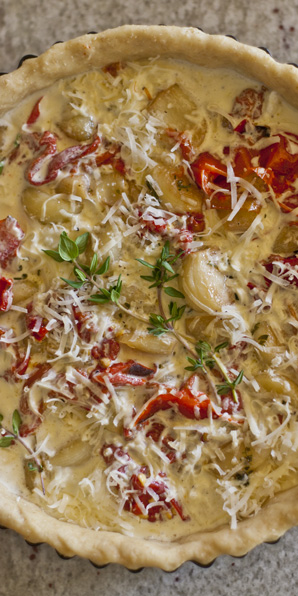

Caramelized Garlic Tart with Roasted Red Peppers and Feta
This is a recipe mash-up, if ever there was one. It all started with Yotam Ottolenghi’s garlic tart recipe in Plenty. Sweet caramelized garlic suspended in a sea of creamy goodness punctuated with tangy cheese. I add roasted red peppers to mine. The gentle smoky flavor adds depth and amps up the sweetness just a notch. Now, on to the crust. Annie Somerville‘s yeasted tart dough in Fields of Greens is pure genius. The dough sacrifices the fat of the butter-laden pastry crust without skimping on flavor. And the almost biscuit-like texture is a nice change of pace. For an added bonus, there’s no blind baking with the yeast dough–just press it in the pan, fill it, and bake it. That said, you can make this with any tart crust you like. The original recipe called for puff pastry.
Ingredients
YEASTED TART DOUGH:
-
1 cup white whole wheat flour, plus more for shaping (or all-purpose)
1 teaspoon instant yeast
1/2 teaspoon salt
1 large egg at room temperature
3 tablespoons unsalted butter, softened
1/4 cup warm water
TART FILLING:
-
30-40 medium garlic cloves, peeled (about three heads of garlic)
1 tablespoon olive oil
2 teaspoons balsamic vinegar
2/3 cup water
1 tablespoon honey
1 teaspoon fresh thyme leaves, plus a few sprigs to finish
2 large eggs
1/2 cup heavy cream
1/3 cup crème fraîche (Sour cream will work too.)
4 ounces feta cheese
1/2 cup Parmesan or Romano cheese, freshly grated, plus 1-2 tablespoons for finishing
1 red pepper, roasted, peeled, seeded, and sliced
sea salt
freshly ground black pepper
Equipment
-
10-inch tart pan with a removable bottom
Preparation
- For the dough*, whisk together the flour, yeast, and salt in a large bowl. Make a well in the center. Add the egg, butter, and water. Mix to form a soft, slightly tacky dough. Bring the dough together with floured hands if it gets too stiff to stir. If it’s too sticky, add flour a little at a time. Transfer the dough to a greased bowl. Cover with plastic wrap and let rise in a warm, draft-free place until doubled, about 45 minutes to an hour.
- Preheat the oven to 325°F.
- While the dough is rising, put the garlic cloves in a small sauce pan and cover them with water. Bring to a boil. Reduce heat and simmer for 3 minutes. Drain the cloves and dry the pan. Return the cloves to it and add the olive oil. Fry the cloves over moderate heat until blistered, about 3 minutes. Add the vinegar and water. Bring to a boil, then reduce heat and simmer gently for five minutes. Add the honey, thyme leaves, and a pinch of salt. Continue simmering over moderate heat until most of the liquid has evaporated and the cloves are coated in a thick syrup, about 6-8 minutes.
- Using lightly floured hands press the dough evenly along the bottom and up the sides of the tart pan, about 1/4″ higher than the rim. If the dough shrinks back, cover it with plastic wrap and let it relax for 15 minutes. Fill it at once or refrigerate it until you’re ready.
- In a small bowl, whisk together the eggs, heavy cream, and crème fraîche. Season with salt and pepper.
- To assemble the tart, crumble the feta cheese and scatter it over the bottom of the tart. Follow it with the 1/2 cup of grated Parmesan. Spoon the caramelized garlic cloves and any remaining syrup over the cheeses. Sprinkle the roasted red pepper slices on top. Pour the custard over the tart filling. You want to see the garlic and peppers peeking out. Dust the top with the remaining grated cheese. Lay the reserved thyme sprigs on top.
- Bake for 40-50 minutes, until the custard is set and the top is golden brown.
Serves 8.
*tip: The dough freezes well. Wrap it in plastic wrap then foil without letting it rise. Remove it from the freezer several hours before you want to use it. Let it thaw at room temperature loosely covered in plastic. It’s ready to use when the ball has doubled in size.
 Ready for another savory tart? Try this Apple Cheddar Quiche with Ham and Sage.
Easter Baskets and a No Knead Finnish Cardamom Bread
I was raised Catholic, sort of. Dad didn’t practice any religion or profess any belief in a god. Given his passive nature and spineless tendencies, he was probably an agnostic as opposed to an atheist. Mom believed in God, sort of. Her faith was steeped in an “oh what the hell, it can’t hurt to believe” kind of attitude. Her fear of what might be if she didn’t believe in God prevailed though it didn’t translate into a pious life. Mom broke more of the Ten Commandments than she followed.
As a kid, mom pushed me out the door to CCD classes every Saturday morning; on Sundays she sent me back to the same church for mass. I never dared to ask her why she didn’t go herself.
How I hated those Sunday mornings. I bit my lip as I walked into the cold, damp church, silently challenging God to prove his existence by making me invisible. I kept my head down until I found a seat not wanting to meet the pitying glances of the people I passed. Blending in was impossible; I was a tomboy forcefully dolled-up in a hand-me-down dress two sizes too big and finished off with ruffled white bobby socks. Years would pass before I understood that the stares had little to do with my awkward dress and everything to do with a ten-year-old going to church alone.
A few months into my Catholic “education” I realized that I didn’t need to spend an hour in an icy church on a bright summer day. Mom just needed to believe that’s what I’d been doing. So instead of slinking to my seat in church, I picked up a copy of the weekly bulletin from the table in the back. With my proof of attendance in hand, I turned and ran to the playground a few blocks away, where I’d swing and smoke stolen cigarettes until the church bells rang letting everyone, including mom, know that church had ended.
Commandment #5: Honor your father and your mother.
Commandment #8: Thou shall not steal.
This is a long, irreverent way of saying that my Easter has always been deeply rooted in the commercial aspects–the baskets, the rabbits, the eggs, the candy. I believed in the Easter Bunny long before I believed in any god. Church was seldom a part of our Easter celebration. While my friends were in church marveling over the Resurrection, I was at home hunting for my over-loaded Easter basket. It had a magic all its own with its pillowy pink and yellow peeps, peanut butter and chocolate eggs the size of baseballs, and always a giant white chocolate rabbit with tempting ears that I couldn’t wait to sink my silver filling-laden teeth into.
Mom and dad hid my basket the night before Easter. The next morning I waited for what felt like hours until I could hear their voices–my signal that I could leave my room and hunt for my basket. Mom was the mastermind behind the hiding; she never made it easy. Dad would offer clues if mom was out of earshot, eager to see the joy the heaping basket would bring me. I squealed when I finally found it. Mom loved to watch me unpack it, layer by layer, stopping only to nosh on a black jelly bean or four as I worked. Later our tiny house would fill with family and the sweet smells of a roasting ham. Kraft Mac and Cheese casseroles and Jesus were far from our minds.
The baskets continued until I left for college. After that Easter as I knew it faded away. Today, it’s the one holiday that I haven’t managed to build a fulfilling tradition around. For the last twenty years I’ve tried on traditions like they were Easter dresses, and like the pretty but over-sized church dress I wore as a kid, they were often awkward and just not me. We’ve shared the day with Greg’s family, with my family, with our friends. During the best of times we agree to do it again the next year, but that notion yields to ever changing schedules, both ours and theirs. Some years we drop in for egg coloring at my in-laws and watch our nieces and nephews splash around in the inky water. I often consider how my Easter ambivalence might change if I had a toddler of my own in the mix, elbow deep in purple egg dye.
Longing to fill the void that remained, I gravitated to what I know best: food. And being the mutt that I am, I borrowed from the traditions of others. Last year it was Russian Kulich and Polish pierogies, and the year before that, hot cross buns. This year Greg and I are spending Easter alone for the first year in a very long time. I’m baking up a nod to Finland with a delicately sweet loaf of Pulla, and I’m bringing back the Easter basket. That’s right, I’m going to find the biggest basket we have and fill it with Greg’s favorite treats–pistachios, bananas, cookies, peanut butter eggs, crossword puzzles, maybe a new garden book. And, I’m planning to hide it.

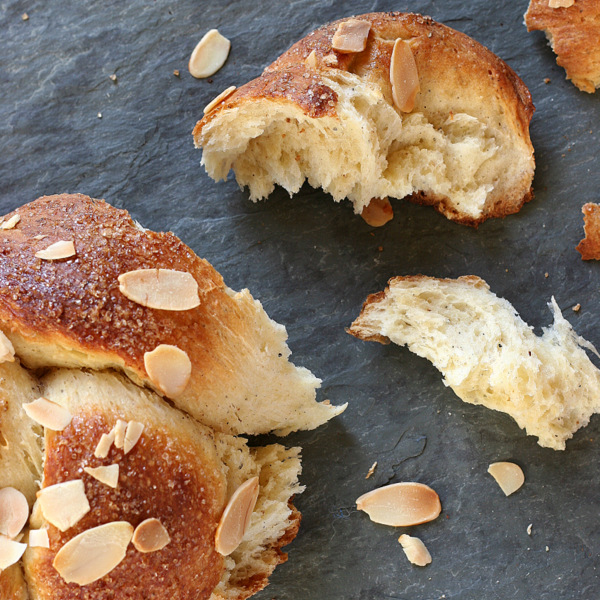
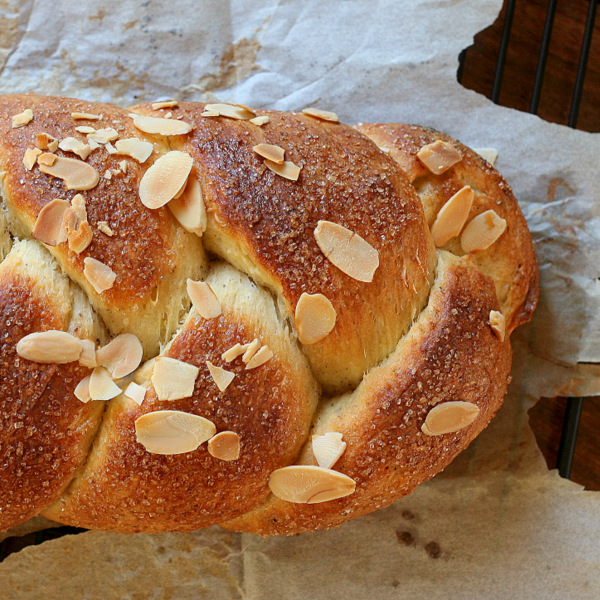
No-Knead Pulla: Finnish Cardamom Sweet Bread
-
Lately, I’ve been experimenting with no-knead egg breads with some exciting results. I don’t mind labor-intensive baked goods especially for delicious, once-a-year, holiday treats, but I know plenty of people who think this fact alone makes me crazy. This pretty, little, no-knead Pulla, adapted from Hugh Fearnley-Whittingstall’s recipe at The Guardian, is my testament that bread making can be easy and even fun. It requires just twenty minutes of active time–the yeast does the real work.
Ingredients
-
2 1/4 cups bread flour
1 1/4 cups all-purpose flour
1/2 teaspoon salt
2 teaspoons instant yeast
1 3/4 teaspoons freshly ground cardamom
1/4 cup butter, melted
1/2 cup granulated sugar
3/4 cup milk
1 egg, 1 yolk
1 egg white
1 tablespoon cream
2 teaspoons coarse sugar (I used turbinado.)
2 tablespoons sliced almonds
Preparation
- In a large bowl, whisk together the flours, salt, yeast, and 1-1/2 teaspoons cardamom. Make a well in the center.
- In a separate bowl, combine the melted butter and sugar. Whisk in the milk, egg, and egg yolk. Stir the wet ingredients into the flour. Bring the dough together with your hands when it gets too stiff to stir. It should be soft and slightly tacky, resembling a shaggy ball. If it’s too sticky, add flour a little at a time.
- Transfer the dough to a greased bowl. Cover with plastic wrap and let rise in a warm, draft-free place until doubled. (Mine took about four hours in a 65°F room.)
- Line a baking sheet with a Silpat or parchment paper.
- Turn the dough onto a lightly floured board. Divide into three equal sections. Roll each piece into a rope 18-inches long. Pinch the ropes together at one end. Braid them together from the pinched end to form a loaf. Pinch the opposite ends together. Tuck both pinched ends under to make a neat loaf. Place on the prepared baking sheet. Cover again and leave to rise until doubled in size. (About an hour in the same 65°F room.)
- Preheat the oven to 375°F.
- Whisk together the remaining 1/4 teaspoon cardamom, egg white, and cream; brush on the loaf. Sprinkle with sugar and almonds.
- Bake for 20-25 minutes, until golden brown.
Makes 1 loaf.

 Don’t wait for a special occasion to try these no-knead breads: Overnight No-Knead Multi-Grain Bread and No-Knead Spelt Bread with Muesli
My Bucket List and Salted Caramel and Peanut Macarons
Like many people that have crossed the invisible threshold that separates thinking you’ll live forever from the reality of yes, I’m going to die one day too, I have a bucket list–you know, that sheet of paper where you write down everything you want to do, experience, or attempt before you, er, kick the bucket. Unlike most people who keep these lists, mine is populated only with food. Yes, there are far away places I dream of visiting, mountains to be climbed, that Grand Canyon that everyone raves about, and so on. I don’t put that kind of stuff on a list–it’s too much pressure. I prefer, instead, to simply see where life takes me.
My culinary bucket list feels more like a dream catcher than a pressure-laden to-do list, at least that’s what I would tell the therapist that made me stop making to-do lists. It’s rife with classics like yule logs, doughnuts, croissants, and cinnamon rolls with a few basics like yogurt thrown in for good measure. And until yesterday, my long list also included macarons. No, not the double “o”, coconut confections you often see dipped in chocolate–the macarOOns. I’m talking about macarOns, the single “o” meringue sandwich cookies that nearly every baking and pastry blog has an entry for. Adding to the confusion surrounding these equally delicious, sweet treats is that the English translation for French macaron, is, you guessed it, macaroon.
Macarons have been on my list since day one. With only a few, simple ingredients and endless options for flavorings and fillings, these dainty confections are right up my alley. Still, I hesitated…for years. For every lovely photo of “The Perfect Macaron” you can find on the Internet, you can find a horror story of macarons gone wrong. Instead of just baking them already, I collected recipes, methods, and techniques as if I were working on a thesis. I bought a pastry tip just for my macaron making, which in short order made its way to the back of my baking drawer where it snuggled up next to my unused doughnut cutter. I saved egg whites. These are for macarons I’d boldly announce as I stashed them in the fridge. Only to turn them into an omelet on Sunday morning. All the while, I continued bookmarking blog posts and stuffing my macaron folder with pictures and recipes–oh yah, I even have a macaron folder. When I finally got down to the business of making macarons, I would be ready.
Yesterday, I picked up the container of egg whites in the fridge so I could get at my tub of store-bought yogurt. I held the little covered bowl in the palm of my hand and stared at it. What if I could let go of the perfect macaron. And just make a damn macaron. A voice in my head cried, “Just do it!” I set the container on the counter and instinctively reached for my folder. Operation Macaron was officially underway. I spread the papers out in front of me creating a sea of “stiff peaks, firm peaks, wet peaks, 350°F, 300°F, let them rest, bake them as soon as you pipe them, don’t make them when it rains, age the egg whites, don’t bother aging the egg whites, but use them cold, wait, no, room temperature….” My head was spinning. I didn’t want to synthesize best practices. I wanted to bake. And I wanted to bake macarons, perfect or otherwise.
I put the folder back on the bookcase and pulled down one of my favorite cookbooks, Ottolenghi, The Cookbook. I turned right to the macaron page, guided by the neon green tab I’d stuck to it years ago. My spirits lifted as I read the headnote, “Our macaroons are ‘homely’…but they are still wonderfully tasty.” (Note the British “oo” spelling.) That was just the nugget of encouragement Operation Macaron needed. I grabbed my Silpats and preheated the oven to 325°F. Ninety minutes later I hovered over my first-ever macarons, beaming with pride. Mine looked nothing like the ones I’d marveled at in patisseries, but they were indeed “wonderfully tasty.” And they were mine. Bucket list in hand, I took the cap off my Sharpie marker and smugly put a bold line through “macarons.”
Do you have a culinary bucket list? I’d love to hear what’s on it.
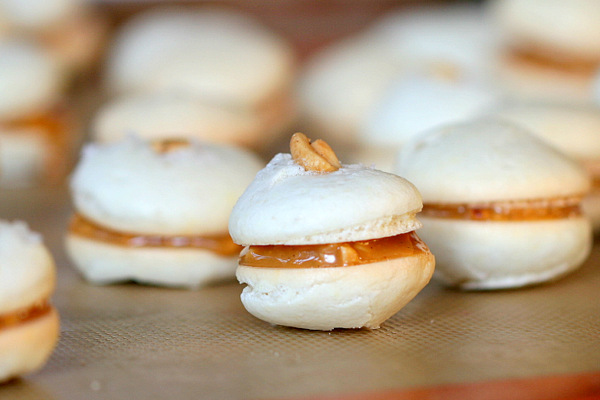
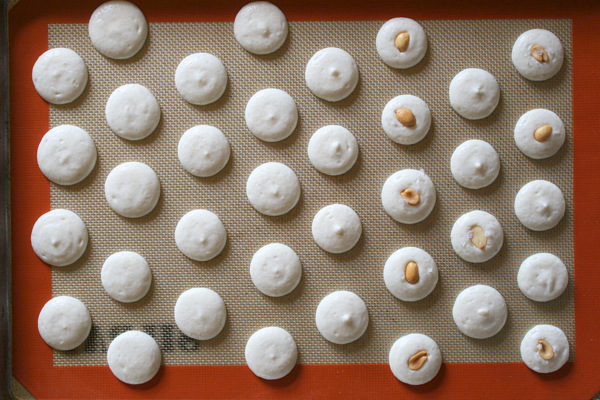
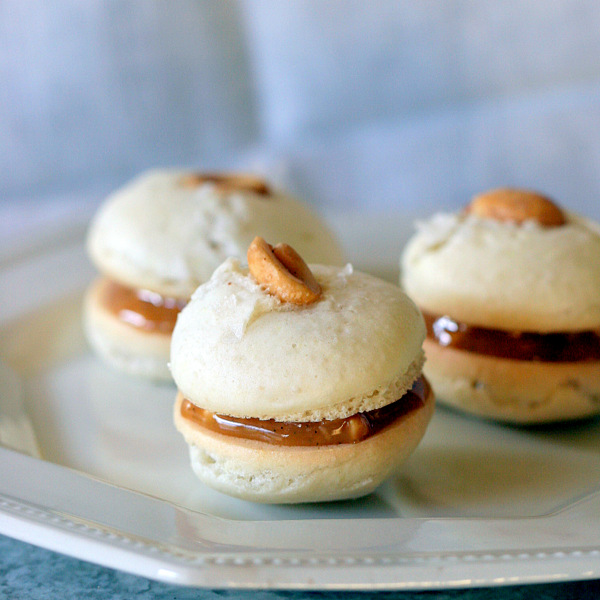
Salted Caramel and Peanut Macarons
Adapted from Ottolenghi, The Cookbook by Sami Tamimi and Yotam Ottolenghi. Legends and lore regarding the making of the perfect macaron abound. Check out Brave Tart‘s Macaron Myths and Ten Commandments of Macarons to learn more. Now, about those grams below. If you’ve got a scale, use it, but don’t let the grams keep you from trying your first-ever macarons.
Ingredients
MACARONS:
-
105 grams (about 3/4 cup plus 2 tablespoons) powdered sugar
60 grams (2/3 cup) almond meal or finely ground almonds
2 teaspoons vanilla sugar
2 egg whites
50 grams (1/4 cup) superfine sugar (If you can’t find superfine or caster sugar, run granulated sugar through the food processor.)
2 tablespoons salted and roasted peanuts, halved (optional)
flaky sea salt (optional)
FILLING:
-
3 tablespoons salted and roasted peanuts, finely chopped
1/3 cup milk jam or dulce de leche
1/4-1/2 teaspoon fine sea salt
Preparation
- Preheat the oven to 325°F.
- Line two baking sheets with Silpats or parchment paper.
- Combine the first three ingredients in a food processor or blender and grind until no lumps remain, the finer the texture, the better.
- Whisk the egg whites and superfine sugar until very stiff and firm, but not too dry.
- Fold in half the almond sugar mixture. When thoroughly combined, fold in the remaining half. Stop folding when the batter is smooth and no streaks of egg white remain. Scrape the batter into a pastry bag fitted with a large, plain tip (I used a 1/2-inch tip.) or a plastic storage bag with a 1/2-inch opening cut into the corner.
- Pipe the batter on the lined baking sheets in 1-1/4-inch circles, spaced 1-inch apart. Rap the tray against the counter several times to flatten the meringue mounds. Place half a peanut in the center of half of the mounds and follow with a few flakes of sea salt. Let dry at room temperature for 15-20 minutes.
- Bake for 10-14 minutes, until you can lift them cleanly off the baking sheet. You don’t want them to brown. Cool completely on the pan.
- To make the filling, combine the chopped peanuts with the caramel and salt. You want a fair amount of salt to balance the sweetness.
- Spread a generous amount of filling on the inside of a plain meringue disc. Top with a salty peanut meringue.
- Unlike most cookies and confections these improve with age. Refrigerate them in an air-tight container. Allow them to come to room temperature before serving.
Makes about 2 dozen.
 These dainty macarons would be sitting pretty next to a few chocolate truffles.
Real March Madness and Crispy Cream Blueberry Blondies
Blooming tulips. Blossoming fruit trees. Sturdy tufts of chives peppered across my herb garden. Vibrant rhubarb stems peeking out from the gritty soil. Our honeybees returning to the hive loaded down with pollen. It’s a perfect picture of spring. Except that until today, it wasn’t spring; it was winter. And this is Chicago. Forget brackets and hoops, this is March Madness for real.
My trusty Sorel snow boots are standing at attention by the back door, two fur-clad soldiers ready for battle should Old Man Winter come a knockin’. My favorite flip flops, the ones I rescued from storage two weeks ago, are carelessly piled next to my boots. It’s a study in contrasts to be sure. The strangeness of it all is magnified when I glimpse a few honeybees buzzing by the door mere inches from my dusty boots separated only by a sheet of glass.
“Don’t you think it’s time to put these away?” Greg asked, motioning toward my boots with his own sandal-clad, pasty foot.
So much for hoping he wouldn’t notice. Greg’s threshold for stacks and stuff not in its proper place is higher than mine. In fact, I wasn’t sure he even had a threshold, because my own fervent desire for stuff to be put in its place–and it all has a place–always prevails. His question lingered as my big boots became the elephant in the room.
“If I put them away, I’ll be jinxed, and it will snow,” I said with absolute conviction though I couldn’t look him in the eye when I said it. It was crazy talk. I knew it even as I spoke. What’s crazier yet is that I still believe it. I’m not usually the superstitious type, but I’m certain that if I put my boots away, Old Man Winter will at long last unleash his fury and the verdant beauty outside my door will be no more.
Record setting high temperatures may be to blame for my slide into the realm of superstition, but they also get partial credit for our new favorite blondies. (Yes, even better than a blondie loaded with chocolate chunks.) That credit is duly shared with my go-to butter and sugar muse Christina Tosi, the genius pastry chef at Momofuku’s Milk Bar. I’ve been toying around with Christina’s recipes ever since her Compost Cookie recipe blasted into cyberspace in 2010. These blondies started out as my version of her Blueberry and Cream Cookies, but when I fired up the oven, the kitchen suddenly filled with warm sunlight. I stared at my boots and then at my flip flops. Another bee buzzed by as if daring me to follow her. It was time to shift my cookie making into fast-gear and get outside lest Old Man Winter come for me and my boots.
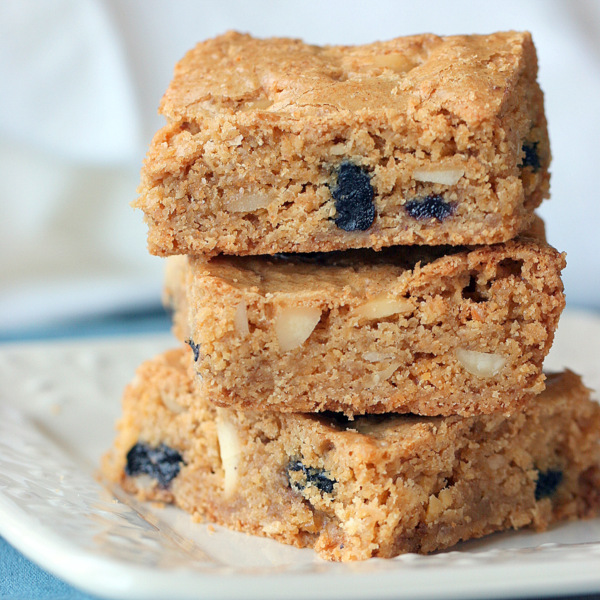
Crispy Cream Blueberry Blondies With Macadamia Nuts
-
These treats are oven ready in a half hour. The blondie batter was adapted from Mark Bittman’s Butterscotch Brownie recipe in How to Cook Everything. The Crispy Cream Crunch was inspired by Christina Tosi’s Milk Crumbs.
Ingredients
CRISPY CREAM CRUNCH:
-
3/4 cup white chocolate, melted
3/4 cup crispy rice cereal
1/3 cup nonfat milk powder
BLONDIES:
-
1 cup unsalted butter, melted (plus more for greasing the pan)
2 cups light brown sugar, firmly packed
2 eggs
2 teaspoons vanilla extract
2 cups white whole wheat flour (or all-purpose flour)
3/4 teaspoon baking powder
1/2 teaspoon salt
2/3 cup dried blueberries
2/3 cup salted and roasted macadamia nuts, roughly chopped
Preparation
- Preheat oven to 350°F.
- For the Crispy Cream Crunch, line a large baking sheet with waxed paper. Combine ingredients in a medium bowl; stir with a fork until the rice is evenly coated. Spread the clusters onto the prepared sheet and refrigerate until ready to use.
- Line a 13 by 9-inch baking pan with heavy duty tin foil, pushing it firmly into the corners and up the sides. Let the excess foil hang over the edges of the pan. Grease the pan with butter.
- In a large bowl, beat melted butter and brown sugar until smooth. Beat in the eggs and vanilla extract.
- In a separate bowl, whisk together the flour, baking powder, and salt. Add the flour to the wet ingredients. Stir in dried blueberries, nuts, and Crispy Cream Crunch.
- Spoon the batter into the prepared pan, spreading evenly with a spatula.
- Bake for 25-30 minutes until a toothpick inserted into the center comes out with a few moist crumbs attached. Cool on a wire rack for 30 minutes. Using the foil overhang, lift the blondies from pan and return them to the wire rack. Let cool completely. Cut into squares and serve.
Makes about 2 1/2 dozen, 2-inch squares.
A Mutt and Her Almost Irish Spice Bread
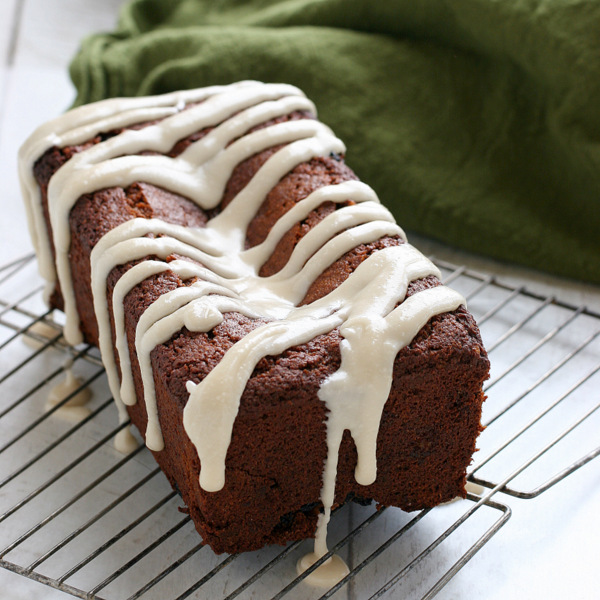
Arán Spíosraí is Irish for spice bread, er, or maybe it’s spiced bread. Spices bread?
Let’s get this out of the way though it’s likely obvious by now: I’m not Irish. This translation was sprinkled over the internet and verified by Google’s imperfect translator. I’ve never been to Ireland. And to my knowledge I’ve never tasted Irish spice bread. Further complicating my kitchen tribute to St. Patrick is that none of my second generation Irish friends had ever heard of arán spíosraí. For the record, they don’t speak Irish either.
Craving something sweeter than soda bread and perhaps convinced I could reap the luck of the Irish through baking, I persevered. I’d found the original recipe at Irishabroad.com. A subsequent search for variations proved fruitless. Countless aggregate recipe sites, Irish or otherwise, listed recipes for arán spíosraí, but with minor exceptions, they were all the same. What if arán spíosraí is a mythical creation like the Leprechaun?
To meet my “must be sweet” and “must be Irish” criteria, I considered a tried and true sticky toffee pudding, but I’d already been seduced by the notion of my arán spíosraí’s spicy sweetness perfuming the house. (In the interest of full disclosure, my friend Melanie makes an other-worldly sticky toffee pudding that I will likely never be able to replicate.) Besides, this was an opportunity to try something new and gain insight into a country and culture I’d admired only from afar.
I’m drawn to foods steeped in history, foods that speak of a specific time and place even if I’ve never experienced that place first hand. Perhaps my own lack of family history is the reason for this. I’m what genealogists, or maybe just my husband, call a mutt. I don’t know when my ancestors arrived in the U.S., or how they got here. I don’t who was on which boat across the Atlantic or who checked in and misspelled our name on Ellis Island. My surname is supposedly German though I’m not certain my dad even knew that. (Yes, I gleaned that nugget from the internet too.) As the story goes, my great grandmother on my mom’s side was a Blackfoot Indian, which of course rules out the boat in one instance. I lost access to my family history when my parents died. By the time I was curious enough to ask the important questions, they were gone.
Being a “mutt” has never bothered me except in the matters of food. As a child I watched my friend Karen’s mom roll out tortillas by hand, something she had learned to do from her mother when she was a young girl. She laid them directly on the gas burner of her stove where they would puff slightly over the bright blue flame. After a few seconds she’d grab the hot tortilla between her calloused thumb and forefinger and quickly flip it on the makeshift cook-top. When it was ready she plucked it from the stove and dropped it on a plate. A little butter. A quick sprinkle of cinnamon and sugar. I was glued to her side the whole time. (The magic was lost on Karen. She envied my mom’s Kraft Mac and Cheese casseroles.)
For years I longed for that kind of history, to have learned the art of strudel dough at the knee of a German grandmother. But more recently as I reflect on fifteen years worth of recipes that fill my five recipe journals, I can appreciate that being without a history that I was obligated to repeat has freed me to explore other cultures and traditions. I’m not locked into the cold, Polish breakfast foods that my in-laws serve every year for Easter though I deeply respect the tradition, their tradition. I stuff my pierogis with farmers cheese. And I also stuff them with roasted butternut squash and caramelized onions. I’m equally satisfied putting together a mezze platter loaded with muhammara, hummus, and warm pita as I am a cheese board. My Indian curries find their way into my all-American cheesecakes. Swedish Limpa bread makes its way into our bread rotation on a regular basis. And I’m adding saltandserenity‘s lovely Jewish hamentashen to my Christmas cookie list for 2012.
Munching on my sweet and oh, so satisfying Irish spice bread, I’m already thinking about Easter. Last year I made my first-ever Kulich, a Russian yeast bread. This year, I’m torn between a Polish babka or an Irish Simnel cake. Or maybe I’ll make them both.
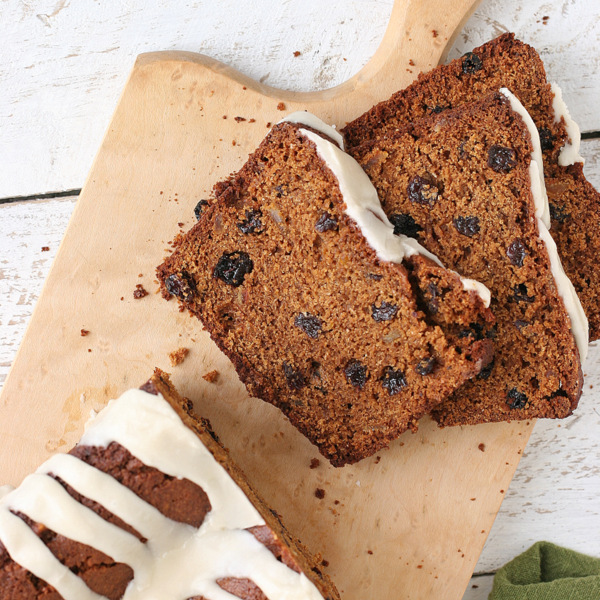
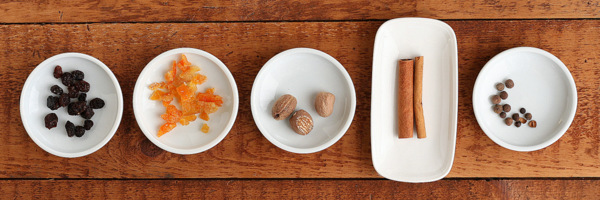
Almost Irish Spice Bread
-
The pronounced sweetness in this “bread” pushes it closer to the cake category though with half the fat of most cakes. None of the recipes I found suggested a frosting, but the dry crumb of this intensely flavored bread-cake called for a little something creamy. If you’re not a fan of whiskey, substitute orange juice and double the amount of vanilla extract. Or skip the frosting and slather it with some Kerrygold butter instead. Éirinn go brách!
Ingredients
BREAD:
-
2 cups white whole wheat flour (or all-purpose)
2 teaspoons baking powder
1/2 teaspoon baking soda
1/4 teaspoon cinnamon
1/4 teaspoon freshly ground nutmeg
1/4 teaspoon ground allspice
1/2 teaspoon ground ginger
1/2 teaspoon salt
1 cup raisins
1/4 cup candied citron, chopped
1/2 cup unsalted butter
3/4 cup brown sugar
1/3 cup honey*
1/3 cup molasses*
1 large egg
1/4 cup milk
GLAZE (optional):
-
1 tablespoon unsalted butter
1 cup powdered sugar
1/2 teaspoon vanilla
3 tablespoons Irish whiskey (or orange juice)
pinch of sea salt
Preparation
- Preheat the oven to 325°F.
- Line a 9×5-inch loaf pan with parchment paper or grease it with butter. (I sometimes like making two smaller loaves–one to enjoy now and a second to stow in the freezer for unexpected guests. The smaller loaves also seem to bake more evenly.)
- In a large mixing bowl, whisk together the dry ingredients. Stir in the raisins and candied citron. Make a well in the center.
- In a small sauce pan, melt the butter. Remove it from the heat and stir in the brown sugar and your liquid sweetener(s) of choice. Beat in the egg and milk.
- Add the wet ingredients to the dry and stir until just combined. Scrape the batter into the prepared pan(s).
- Bake for 50-60 minutes, until a toothpick inserted into the center comes out clean. (Adjust the baking time if you are using smaller loaf pans.)
- Cool on a rack for 20 minutes then remove from the pan. Allow to cool completely before glazing.
- To make the glaze, melt the butter in a small saucepan. Remove from heat and whisk in powdered sugar, vanilla, and whiskey or orange juice. Allow the glaze to cool and thicken for 15 minutes. Spoon the glaze into a pastry bag fitted with a large tip or into a sturdy plastic bag with a 1/2-inch opening in the corner. Pipe glaze in a zigzag pattern across the top of the bread.
* The original recipe calls for golden syrup, a product made in the process of refining sugar cane juice into sugar. With no golden syrup in the pantry, I substituted equal parts honey and molasses. You can also substitute light or dark corn syrup.
 Ready for more almost Irish baked goods? Try this Rosemary Rum Raisin Soda Bread.
Absence and Coconut Chow Mein Butterscotch Cookies
For two weeks this big bed hundreds of miles from our home has felt empty. I wake too early, the rural silence unsettling for this city girl. I reach for you in the darkness like I always do, a twelve-year habit that I can’t bare the thought of breaking. My hands meet a cold, crisp sheet. Where are you? Where am I? The sleepy haze begins to clear, and I remember that you’re at home in our bed, so far away. I fumble for the light. I miss you less once my day has started; the light holds so many distractions. But in the dark, awake, all I feel is your absence.
I’ll be home tomorrow. It’s so close now I can almost feel your arms around me, welcoming me back. The house will smell like brown butter when you open the back door and find me in the kitchen making cookies especially for you–sweet and just a bit savory–the way you like them. While you debate having a second cookie, I’ll tell you all about Austin–the silky smoked yellowtail at Uchi, the sage funnel cake at barley SWINE, the red velvet from Hey Cupcake!, the crazy cowboy gear at Allen’s Boots, and too many stories about Claire and Carmen. You’ll take in every detail even if you’re bored, because you missed me too. Then you’ll show me the projects you found time for while I was gone–the window trim, the rebellious oven door, and the delicate seedlings–our future garden–sprouting under the grow lights. I’ll remember for the third time just how lucky I am. And later that night in the darkness, I’ll reach for you and find you at last.
Coconut Chow Mein Butterscotch Cookies
-
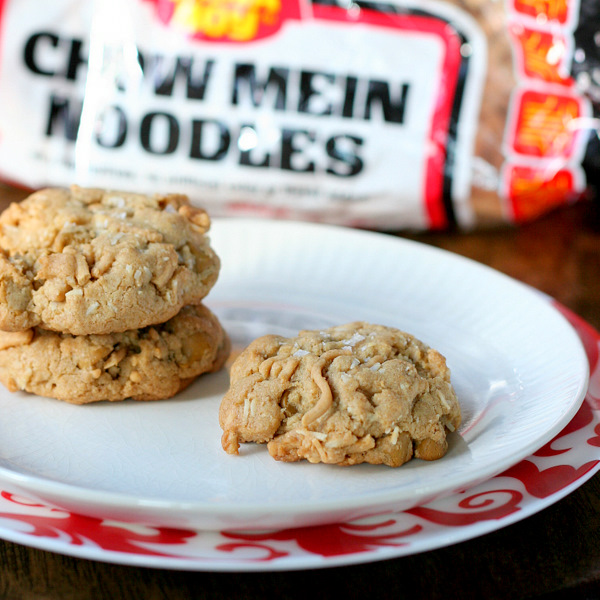
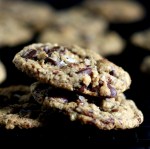
Decades ago my mom made a no-bake cookie that I loved: melted butterscotch morsels, chow mein noodles, done. Combining the ingredients in a straight up cookie dough has been on my “must try” list ever since I tasted my first Momofuku Milk Bar “Compost Cookie,” the sweet meets savory brainchild of pastry chef Christina Tosi. Further inspired by memories of baking with mom (Mom ALWAYS made us mix cookie dough by hand.) and too weary from traveling to drag out the Kitchen Aid, I made these without a mixer. The result was a jam-packed cookie that screamed with flavor.
Ingredients
-
1/2 cup unsalted butter, softened
1/2 cup light brown sugar, firmly packed
1/4 cup granulated sugar
1 large egg
1 teaspoon vanilla extract
1 1/2 cups white whole wheat flour (or all-purpose flour)
3/4 teaspoon baking soda
1/2 teaspoon salt
3/4 cup unsweetened coconut flakes
3/4 cup chow mein noodles
1 cup butterscotch morsels
flaky sea salt (I use Maldon, but any coarse salt will work.)
Preparation
- Preheat oven to 350°F.
- Beat butter and sugars until creamy. Add egg and vanilla extract.
- In a separate bowl combine the flour, baking soda, salt, and coconut. Add the dry ingredients to the wet. Stir in noodles and butterscotch chips.
- Roll dough into balls about the size of golf balls (approx. 1 1/2 tablespoons of dough) and place two inches apart on ungreased baking sheets. Flatten the tops slightly with a glass. Sprinkle lightly with sea salt. Bake for 12-15 minutes or until lightly browned but still soft. (I prefer mine slightly under cooked.)
- Cool slightly on baking sheets. Remove to wire racks to cool completely.
Makes 2 dozen.





 Bob Vivant