Fennel Crisps
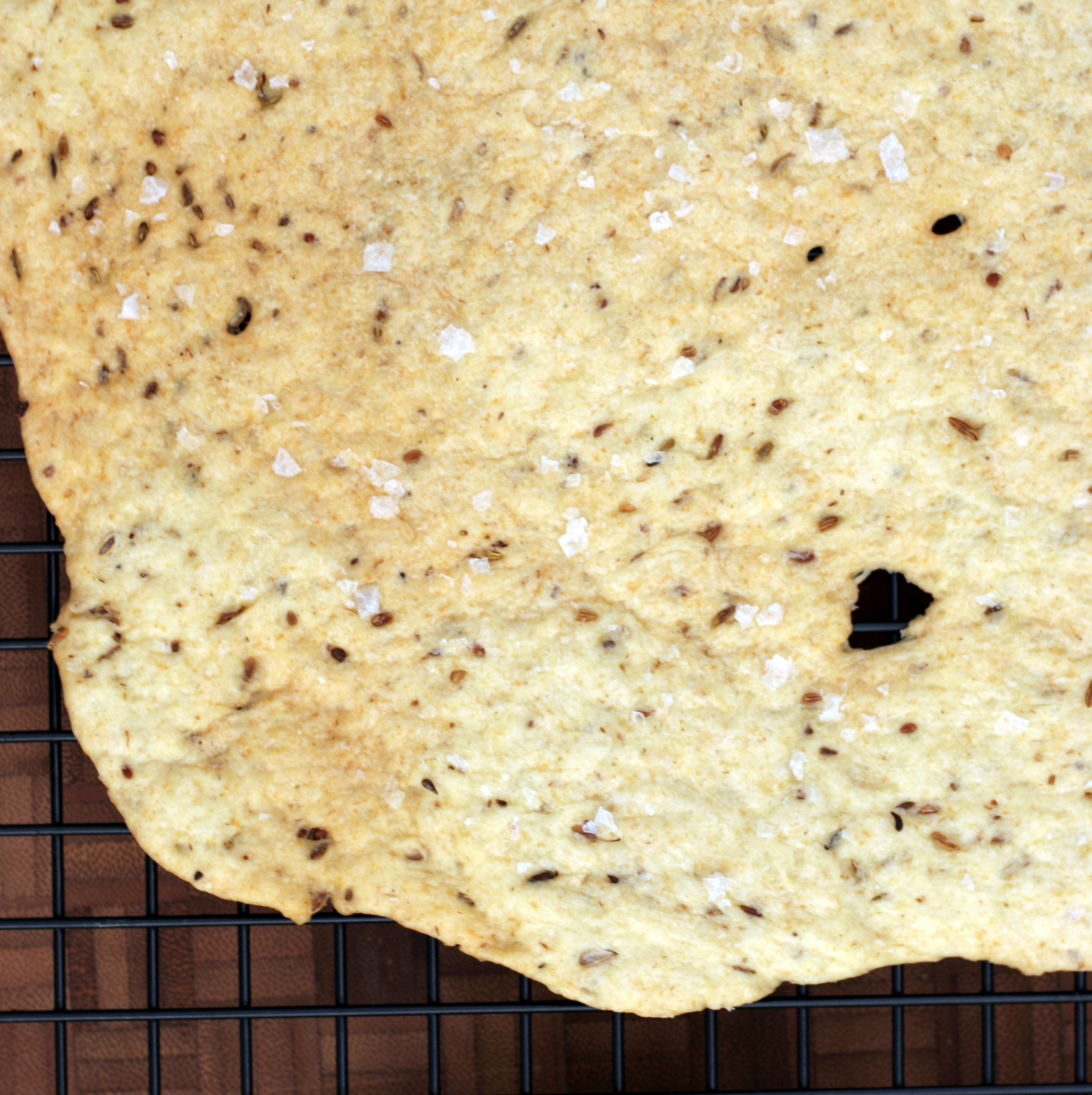
Like many food lovers I know, I go through phases with my cooking. 2009 was the year of marmalades and cheese. 2010 was all about bread and chutneys. 2011 is shaping up to be the year of the cracker.
My recent phases, or obsessions as some people, including my devoted husband, describe them, have something significant in common: They were born of my passion for making edibles that most people would otherwise buy.
“Why do you always do things the hard way?” a friend recently asked me. “Are you trying to make the rest of us look bad?”
The answer on both counts is, no, of course not. I sometimes spend hours studying recipes and hours testing and tweaking them (Okay, maybe it is an obsession.), because the rewards are worth the effort. And the learning process is every bit as satisfying as the end result. The engineer in me relishes cracking the code of my muse:
My first marmalade was a tasty but overdone novelty.
A few tweaks.
My second rivaled any I had the pleasure of tasting in the UK.
More tweaks.
The third batch was arguably better than any I could buy anywhere.
Mission accomplished.
The payoff is even sweeter when I discover that my DIY versions are not only delicious, but fast and simple–like crackers. These rustic fennel crisps are the tastiest and easiest crackers I’ve made to date. I can get a batch in the oven in under 15 minutes–faster than I can get to the store and back. They’re also infinitely versatile and can be made to suit anyone’s tastes. Not a fan of fennel? Try adding 2-3 teaspoons of coarse ground black pepper and sprinkle the tops with grated Parmesan. Or add a tablespoon of minced fresh rosemary as the inspiration recipe suggests. I’m making my next batch with toasted sesame seeds.
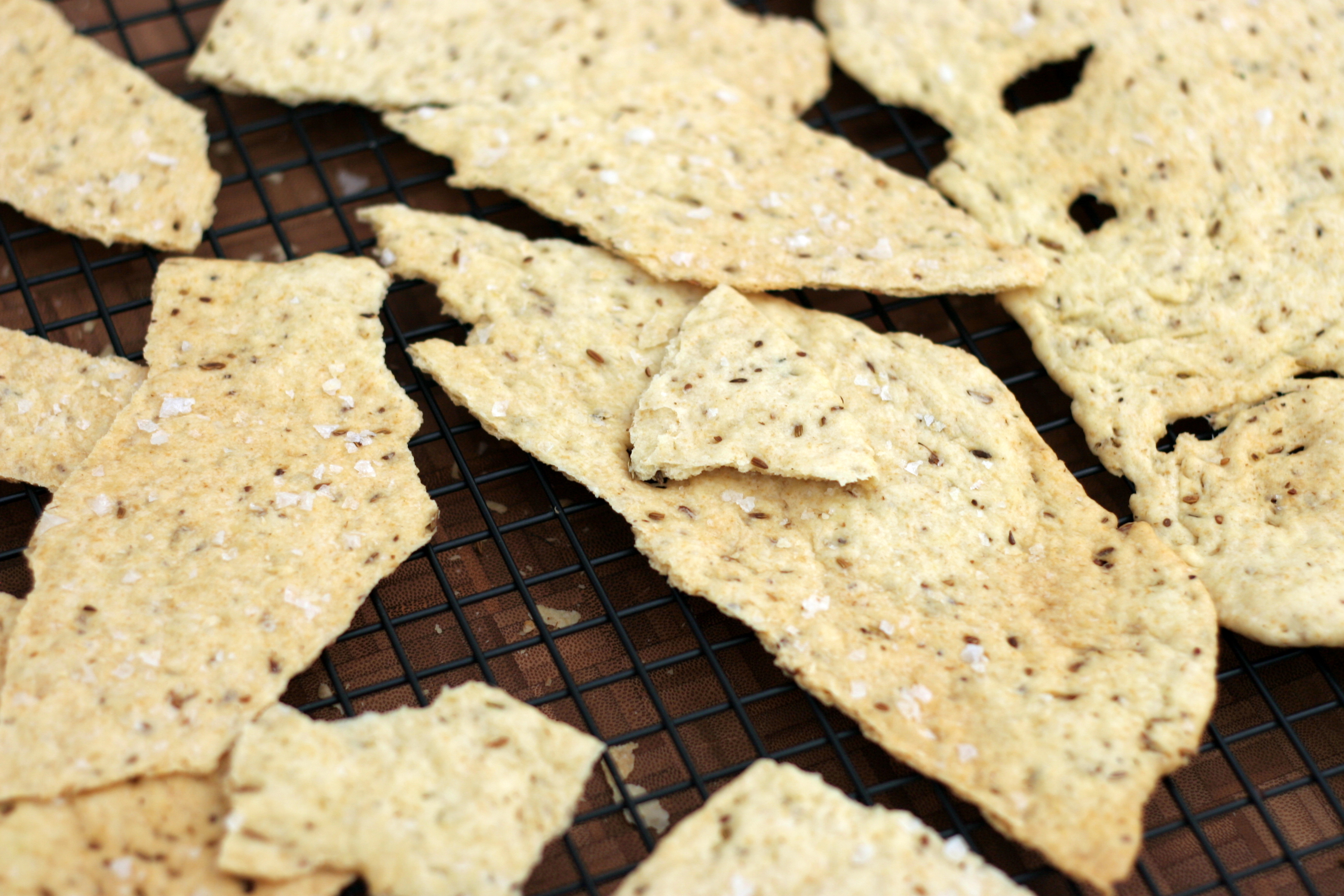
Fennel Crisps
Adapted from this recipe in Gourmet, July 2008
Ingredients
1 3/4 cups all-purpose flour
2 teaspoons fennel seeds, coarsely ground
1 teaspoon anise seeds*, coarsely ground
1 teaspoon baking powder
3/4 teaspoon salt
1/2 cup water
1/3 cup olive oil plus more for brushing
Course sea salt (Flaky Maldon salt is my favorite.)
Preparation
- Preheat oven to 350°F.
- Combine dry ingredients in a medium-sized bowl and make a well in the center.
- Add water and 1/3 cup of olive oil. Stir to thoroughly combine.
- Divide dough in half. On a sheet of parchment paper or a Silpat, roll half the dough out into a 10×14 rectangle. Place the parchment on a baking sheet. Repeat with remaining dough.
- Drizzle the top of each with olive oil and evenly distribute it with a brush or your hands. Sprinkle with sea salt.
- Bake for 20-25 minutes, until lightly golden at the edges. To ensure even baking, switch the tray positions after ten minutes.
- Carefully slide the cracker sheets onto a wire rack. Don’t fret if they are slightly soft when you remove them from the oven; they will crisp as they cool.
- When completely cool, break into assorted shapes. Eat immediately. Store leftovers in an airtight container.
note*: The combination of anise and fennel seeds deepens the flavor. Anise seeds have a strong bite that quickly fades, while fennel seeds are often milder with a longer finish. You can substitute an additional teaspoon of fennel seeds for the anise seeds.
 Are you cuckoo for crackers like me? Consider making your own whole wheat crackers. They’re a bit fussier than the rustic crisps above but equally delicious and satisfying.
Chewy Blueberry Almond Granola Bars

I love road trips. With a good audio book, a gracious and spirited driver, and a bagful of yummy snacks, I’ll go just about anywhere. In the car and in life, the journey can be as exciting as the destination. Last weekend my husband Greg and I packed the car with our hiking gear, Scrabble, and other essentials like good wine and bourbon, and headed to Westby, Wisconsin—a five-hour drive from our home in Chicago. (It takes six hours if your gracious driver agrees to visit your favorite cheese makers along the way.) Sure, Westby is a far cry from the Spring break hot spots prominently featured on the Facebook pages of my cruel friends, but it’s a great place to reconnect with nature and escape the hustle and bustle of the city. Besides, you won’t get to hear two barred owls call and answer from the deck of a Carnival Cruise ship.
Since man cannot live by cheese alone (Believe me, I’ve tried.), I packed our feed bag with Greg’s favorite rosemary almonds, some clementines and sliced carrots, and my new favorite granola bars. These tasty bars came together in under fifteen minutes. They’re chewy, but not easily squashed if your gracious driver drops his full water bottle on one. Safe travels and happy noshing!
Chewy Blueberry Almond Granola Bars
Makes 18 bars.
Ingredients
2 1/2 cups rolled oats (not instant)
1 1/2 cups unsweetened puffed cereal (wheat or kamut)
1/2 cup finely ground almonds (or almond meal)
1/2 cup ground flax seeds (or flax seed meal)
1/2 cup unsweetened shredded coconut
2/3 cup honey
1/3 cup brown sugar
3 T melted butter
1/2 tsp salt
1/8 teaspoon ground cardamom (optional)
3/4 cup dried blueberries (Cherries are nice too.)
Preparation
- Line a 9×9″ square cake pan with aluminum foil. Lightly coat it with vegetable oil or cooking spray.
- In a large bowl, combine oatmeal, puffed cereal, ground almonds and flax seeds, and coconut.
- Combine honey, brown sugar, and butter in a medium saucepan over low-moderate heat. Remove from heat when the butter and sugar have melted into the honey. Stir in salt and cardamom, if using.
- Pour the honey mixture over the oat mixture and stir until dry ingredients are evenly coated. Stir in dried fruit.
- Using a lightly oiled large spatula or your hands, evenly compress the mixture in the prepared pan.
- Once the pan has cooled completely, lift the slab from the pan. Use a large chef’s knife to cut the slab into a 6×3 grid. Individually wrap the bars in waxed paper. Store in an airtight container and refrigerate.
Nutrition summary: calories: 189, fat: 6.7g, fiber: 3.4g, protein: 3.3g
 Got a hankering for more blueberries and granola? This should do the trick: Blueberry Coconut Cardamom Granola.

Mini Pretzel Rolls
We recently hosted a party for my dear friend Lisa in celebration of her graduation from culinary school. As you might expect, it was all about the food. Chef Lisa, who will be opening her restaurant Bread & Wine in Chicago this fall, planned the party menu and shared her vision with me. With forty of her closest family and friends planning to attend, including her business partner and friend Jenny, it was a perfect opportunity to test prospective menu items for their restaurant. I was in charge of executing her plan. Yikes.
At the top of Lisa’s party wish list was the “Bread & Wine” Burger served on a pretzel roll. “Are you sure you want a pretzel roll?” I asked. It’s time for a confession: I don’t care for pretzels–not soft ones, not hard ones, not minis or sticks, not sourdough, not Bavarian. You get the picture. It’s nothing deeply rooted like my absolute disdain for Jello; there are simply far more edibles I prefer over pretzels.
“Yes, I’m sure,” Lisa said. I reminded myself that it was her party after all. Besides, I’m always game to try something new, including pretzel rolls.
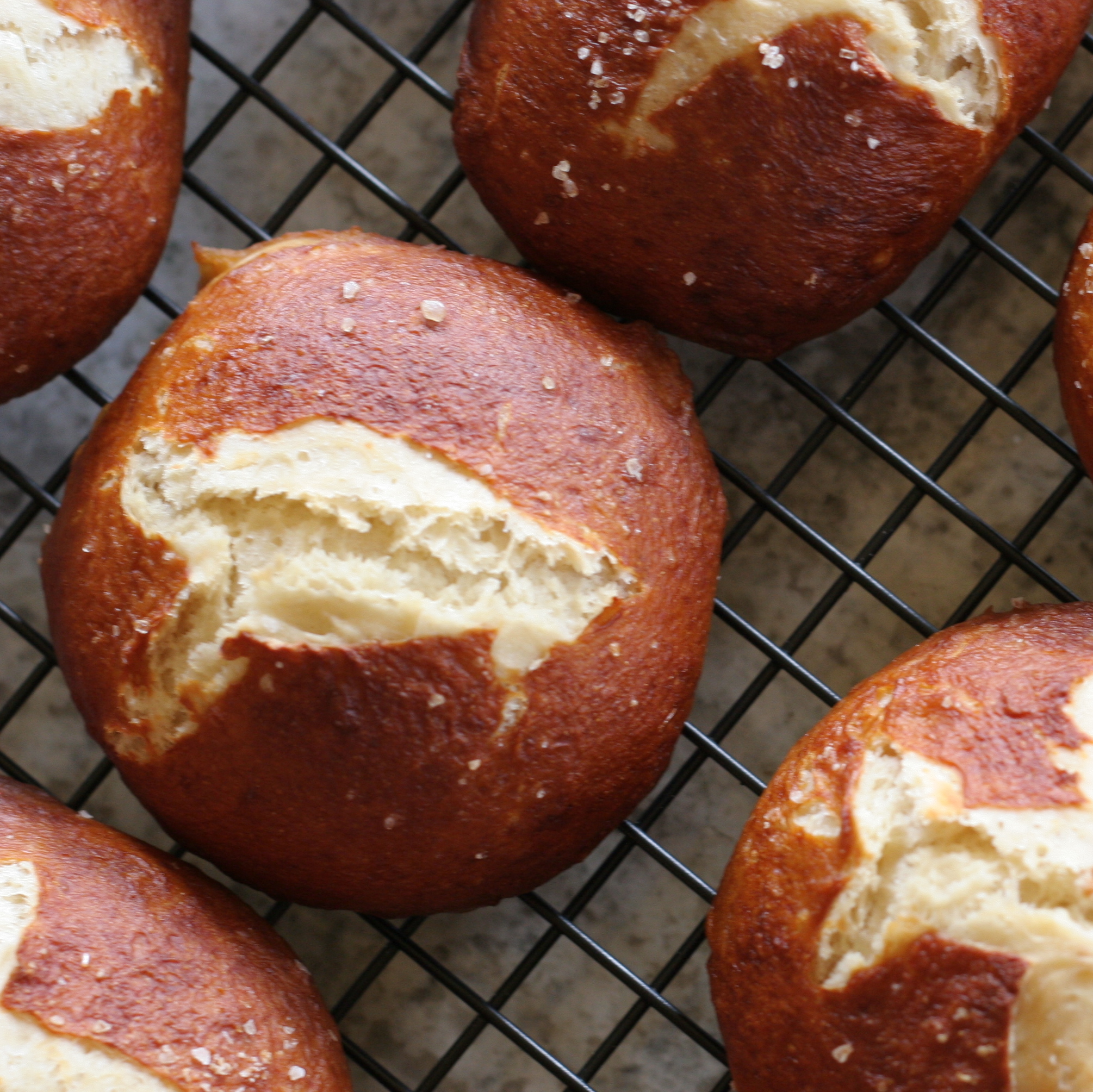
We wanted small bites and nothing that would require—heaven forbid—putting your cocktail down. So we scaled the burger down into a slider. Then came the challenge of finding pretzel rolls small enough for sliders. After too many phone calls and bakery visits, I came up empty handed. “I’ll just make them,” I said to my husband after another dead end call. He tried to talk me out of it. He’s watched my good intentions in the kitchen crash and burn—literally—one time too many. To put his mind at ease, I vowed to do a test batch before the big day. And guess what? They were easy—24 piping hot, deeply golden rolls in just under an hour. An hour! But the biggest surprise came when I tasted one; they were amazing. The crust was thin with a delicate crunch that gave way to a light and slightly sweet interior. Chef Lisa knew best—they were the perfect partner for the “house” burger.
The party was a success thanks to Lisa’s delicious vision and the wonderful friends who helped pull it all together. And I’ve added pretzel rolls to my list of favorites. This is why I love to experiment; the more things I try, the more I realize what I’ve been missing.
Mini Pretzel Rolls
Adapted from this recipe at food.com.
Ingredients
4 cups all-purpose flour
2 1/4 teaspoons instant dry yeast (or one 0.25oz packet)
1/3 cup light brown sugar
1 1/3 cups warm water
2 tablespoons milk
2 tablespoons butter, melted
2 quarts water
1/2 cup baking soda
coarse sea salt
Preparation
- Combine the flour, yeast, and brown sugar in the bowl of a standing electric mixer fitted with a dough hook. In a small bowl stir together the warm water, milk, and melted butter.
- Add the wet ingredients to the dry. Mix on low speed for 3 minutes once the ingredients have come together in a ball. The dough should be soft and pliable and not sticky. Add more flour or water as needed. (You can make the dough without a mixer. Once the dough comes together, transfer it to a floured board and knead for 5-7 minutes, until smooth and elastic.)
- Using a scale, portion the dough into even pieces and set them on a floured board. A 2.5 ounce portion works for a traditional burger bun. For sliders you’ll want 1.25-1.5 ounce dough ball. Cover dough with oiled plastic wrap and let rest for 10 minutes.
- Shape the dough balls into rolls. Arrange them on a lightly floured surface 1-inch apart and cover with oiled plastic wrap. Let the rolls rise in a warm place for 30 minutes.
- Preheat the oven to 425°F. Line 2 baking sheets with parchment paper or silicon baking mats.
- In a large stockpot, bring the cold water and baking soda to a rolling boil.
- Drop the rolls into the boiling water 2 at a time. Boil for 20 seconds total, turning once. Carefully remove with a slotted spoon and place on the prepared baking sheets. Sprinkle lightly with the coarse salt. Repeat with the remaining rolls.
- Make a ½-inch deep slash across the top of each roll with a small, sharp knife. Bake for 8-10 minutes, until the tops are the color of dark caramel (or, uhm, until they look like pretzels). Shift pans from top to bottom and back to front halfway through for even baking.
- Let rolls cool on the baking sheets for 5 minutes, and then transfer to a wire rack.
Makes 24 rolls.
Can You Ever Get Tired of Pizza?

Roasted butternut squash pizza with duck confit and smoked gouda
We make pizza every Friday at our house.
Okay, maybe not every Friday. Sometimes, for reasons beyond our control, we can’t make pizza on Friday. So we make it on Saturday instead. Occasionally, someone will ask me if I get tired of eating pizza. In all cases, the person asking the question has never had the pleasure of eating our pizza. Is it the crispy, thin crust? Is it the freshness of the ingredients? Or is it merely the fact that I consider pizza to be a food group in and of itself? Maybe it’s all the above. I think the real reason we never tire of pizza is that the toppings are always changing. Fresh tomato and basil in the summer yield to roasted squash and Gorgonzola in the fall.
We track our hits and misses (Yes, there have been a few yucks.) in a pizza log. Here is a look at some of our (mostly vegetarian) tried and true, white pizza favorites:
| base | layer 1 | layer 2 | sprinkle | dash | cheese! | at the end |
|---|---|---|---|---|---|---|
| EVOO + minced garlic | crimini mushrooms | paper thin potatoes | fresh thyme | coarse sea salt | Taleggio + Gruyere | truffle oil drizzle |
| pesto + minced garlic | roasted tomatoes | coarse sea salt | mozzarella + Parmesan | |||
| EVOO + minced garlic | roasted acorn squash | red pepper flakes | coarse sea salt | Gorgonzola + mozzarella | maple syrup drizzle | |
| EVOO + minced garlic | fresh sliced mushrooms | fresh or dried thyme | coarse sea salt | Gruyere | truffle oil drizzle | |
| EVOO + minced garlic | roasted root vegetables | pine nuts | fresh ground nutmeg | white cheddar | truffle oil drizzle | |
| pesto + minced garlic | roasted red peppers | paper thin potatoes | coarse ground fennel seeds | red pepper flakes | feta + asiago | |
| EVOO + minced garlic | marinated artichoke hearts | sundried tomatoes | hot banana peppers | white cheddar + mozzarella | ||
| EVOO + minced garlic | roasted butternut squash | sautéed Swiss chard | toasted pepitas | coarse sea salt | chèvre + fontina | |
| EVOO + minced garlic | roasted butternut squash | duck confit | maple syrup + aged balsamic | dried sage | smoked gouda + mozzarella | |
| EVOO + minced garlic | paper thin potatoes | minced fresh rosemary | coarse sea salt | Parmesan | truffle oil drizzle | |
| EVOO + minced garlic | paper thin sweet potatoes | caramelized onions | fresh or dried thyme | coarse sea salt | Gorgonzola | scallions |
| fig preserves | sliced pears | caramelized onions | fresh or dried thyme | Gorgonzola | ||
| EVOO + minced garlic | fresh cherry tomatoes, halved | basil | pine nuts | coarse sea salt | fresh mozzarella | |
| EVOO + minced garlic | paper thin potatoes | duck confit | coarse sea salt | smoked gouda + white cheddar | scallions | |
| lemon olive oil + garlic | asparagus, thin stalks | diced smoked ham and/or mushrooms | coarse ground black pepper | coarse sea salt | fontina | |
| lemon olive oil + garlic | summer squash, thin sliced | coarse ground black pepper | coarse sea salt | chèvre + fontina |
Ricotta Tart with Maple Glazed Winter Squash
 This is a sentimental dish for me. I made it for the first time last fall when I was volunteering on an all-natural dairy farm in New York’s idyllic Hudson Valley. The crust was made with local butter and lard from pigs raised on the farm – happy pigs. I used goat’s milk ricotta that we’d made that morning right after the goats had been milked. The eggs were still warm when I cracked them over the ricotta, having just been stolen from a brooding hen. I used a carnival squash that we’d been given in trade for a freshly harvested chicken. The tart was finished with a generous sprinkle of our fresh chèvre.
The dinners I made during my stay on the farm were some of the best that I can remember, redefining for this city girl just exactly what it means to ‘eat local’. I still dream of those warm eggs with their bright orange centers.
Since returning to Chicago, I’ve made this tart a dozen times using a variety of squashes and finishing cheeses. And with each satisfying bite I’m transported to that magical place.
Ricotta Tart with Maple Glazed Winter Squash
Inspired by Susan Spungen’s recipe for Savory Ricotta-Squash Tart in Food and Wine Magazine.
Serves 4-6
Ingredients
- Hazelnut Crust:
1/2 cup hazelnuts
3/4 cups whole wheat pastry
1/2 teaspoon salt
5 tablespoons unsalted butter, cold and cut into small pieces
2 tablespoons cold water
- Filling:
1 medium butternut (the neck only) or acorn squash
2 tablespoons olive oil
2 tablespoons maple syrup
1/2 cup shallots, thinly sliced
12 ounces fresh ricotta
2 eggs
2 tablespoons whipping cream
1/4 teaspoon freshly grated nutmeg
salt
2 ounces chèvre, crumbled
2 tablespoons dried cranberries
Preparation
- Hazelnut Crust:
- Preheat oven to 350°F.
- In a baking pan toast hazelnuts in one layer until skins are dark brown, about 10 minutes. Finely chop the nuts once they have completely cooled.
- Place the pastry flour, chopped hazelnuts, and salt in the bowl of the food processor. Pulse to combine.
- Sprinkle the butter over the flour mixture. Pulse again until coarse crumbs form.
- Add the water and blend dough until it begins to come together but is still crumbly.
- Press dough in bottom and up the sides of a 14×5-inch tart pan (or a 9” round) with a removable bottom. Chill crust 30 minutes.
- Increase oven temperature to 400°F.
- Bake crust in middle of oven until golden, about 25 minutes, and transfer to a rack to cool completely.
- Filling:
- Peel the butternut squash neck and cut into ½-inch slices. (If using acorn squash, leave the skins on.) Arrange the slices on a baking sheet. Combine one tablespoon each of olive oil and maple syrup and brush on the squash slices. Season with salt and pepper. Bake for 25-30 minutes, until the squash is tender. Reduce oven temperature to 375°F.
- Heat the remaining tablespoon of olive oil in a medium skillet over medium heat. Add the shallots and stir to coat with the oil. Add a pinch of salt. Allow the shallots to cook slowly, stirring occasionally until golden. Add the remaining maple syrup and remove from heat.
- Combine the ricotta, eggs, cream, nutmeg, and a ½ teaspoon salt in a medium bowl.
- Spread the ricotta filling in the cooled pastry shell. Sprinkle the caramelized shallots on top. Arrange the squash slices over the shallots. If using butternut squash, scoop out a 1-inch diameter circle in the center of each slice to create a nook for the remaining ingredients to nestle in. Sprinkle the crumbled chèvre and dried cranberries over the top of the tart.
- Bake for 30 minutes, until the ricotta filling is puffed and firm to the touch. Enjoy!


 Homemade tarts can be enjoyed all year round using what’s in season.
Give these a try in the summer:


Homemade Whole Wheat Crackers

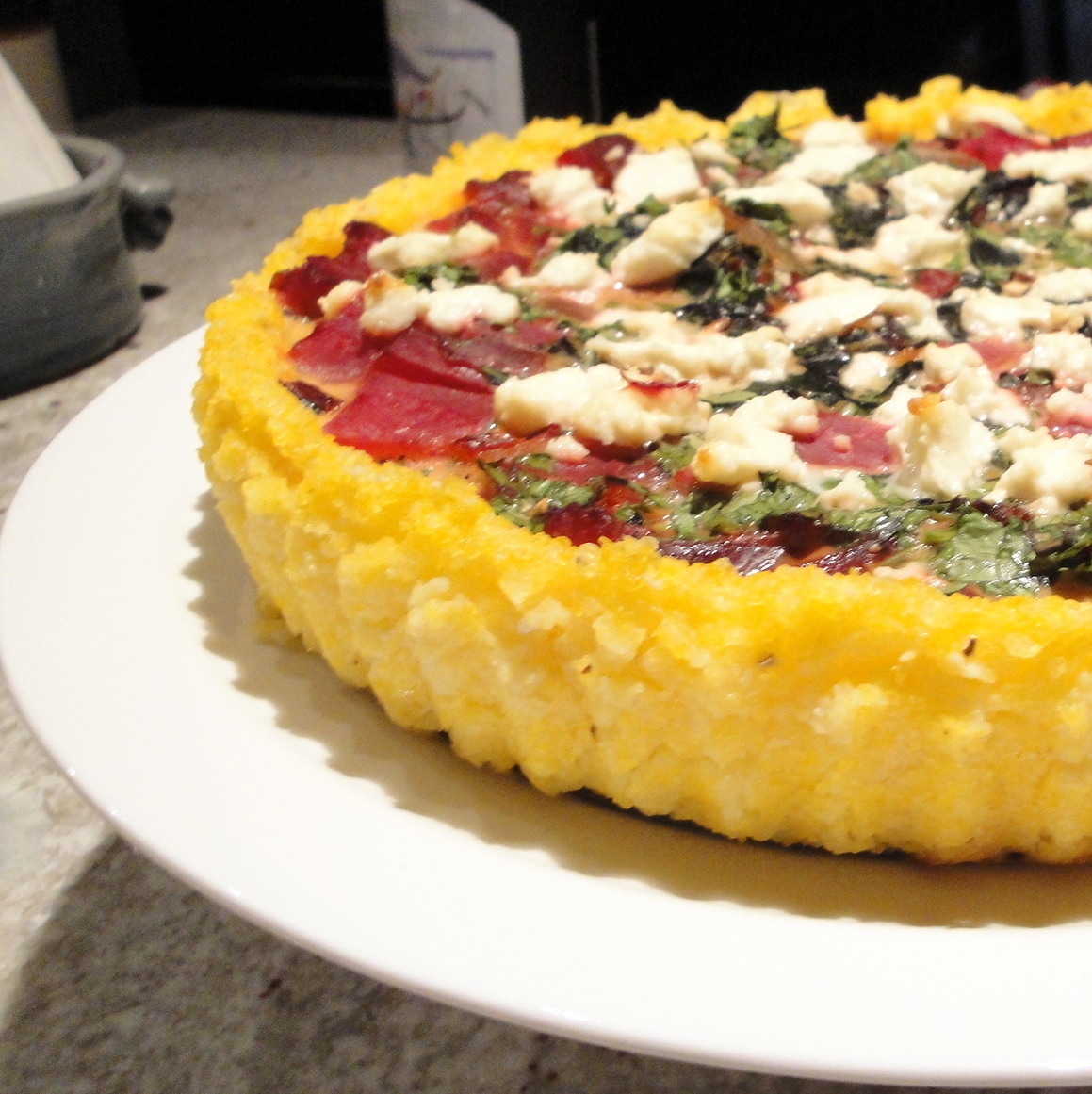
Making things – edible things – things that most people buy – from scratch is one of my greatest pleasures. Sadly, I often find that the end result doesn’t justify the time and effort spent. As a case in point, I offer the croissant. Try as I have, I cannot, in my humble kitchen 4200 miles removed from Paris, achieve a flaky, buttery, mouth-watering pastry that even comes close to the ones I’ve had the pleasure of gorging myself on in France. Fortunately, such disappointing moments are occasionally countered with a homerun: I present to you the whole wheat cracker.
These slightly sweet crackers remind me of my treasured Carr’s Whole Wheat Crackers in taste and texture. However, unlike the Carr’s, these are crisp and light, and sturdy enough to make their way through a thick dip without breaking. I love them plain or dressed up with blue cheese and honey. Cut them into circles or squares or hearts. Sprinkle them with crushed fennel seeds or Maldon salt or grated parmesan just before baking. The possibilities are endless. And before you know it, you won’t be buying crackers at the store either.
Homemade Whole Wheat Crackers
Ingredients
- 2 cups whole wheat flour
2 tablespoons sugar
1 teaspoon salt
1/2 cup unsalted butter, cold and cut into small cubes
1/2 cup milk, or more as needed
flaky or coarse salt (optional)
Preparation
- Place the flour, sugar, and salt in the bowl of a food processor. Pulse to combine.
- Sprinkle the butter over the flour. Pulse until coarse crumbs appear.
- With the processor running, slowly add milk just until the mixture resembles large curds. Don’t wait for it to form a ball and ride on the blade, or you risk overdoing it.
- Turn the dough out onto a piece of plastic wrap. Compress it to form a solid disk about 6-inches in diameter. Wrap the dough tightly in the plastic and refrigerate for at least an hour or up to a week.
- Preheat the oven to 325°F.
- Roll the dough out to an 1/8-inch thickness on a lightly floured board. (I roll mine between two large Silpats; peel the top one off; cut the crackers; and slide the bottom one onto a baking sheet.)
- Generously sprinkle with flaky salt. (I love Maldon.) Gently roll the dough once more to press the salt into the dough.
- Using a pastry cutter or knife cut the dough into any shapes you find pleasing. Take care if you are cutting them directly on a Silpat. (I like small squares like the ones pictured above for snacking. For a cheese board, I’ll make them a little bigger.)
- Transfer the crackers to a large baking sheet. Bake for 20-25 minutes until deep golden brown.
- Allow crackers to cool on the sheet for five minutes then remove to a wire rack.
- Store in airtight containers when completely cool.

A Hundred Loaves and Counting
If you’ve never heard of spelt, or you think that muesli is only something that Europeans eat for breakfast, please read on and resist the urge to close your browser. Ingredients like spelt and muesli are merely examples of the infinite varieties of bread you can create depending on what you have in your pantry and what you like. Forget the spelt and muesli, if you have flour, yeast, water, and salt, you can make bread.
Frankly, bread making was something that intimidated me for a very long time. In spite of the short ingredient list, bread just seemed – well, it seemed too fussy with all that tedious kneading and folding. And who has time for fussy especially when you live in a big city where a delicious bakery is often just a short walk away. Then I caught wind of this “no-knead” bread phenomenon recently made popular by Jim Lahey of Sullivan St. Bakery in New York. I was skeptical to say the least, but after just one loaf, I climbed onto the bandwagon. Not only is bread making easier than I ever imagined, it’s extremely forgiving – more art than science. My love affair with homemade bread has raged on for two years. I can’t even remember the last time we bought bread. While I still enjoy the simplicity of the no-knead method, I occasionally bask in the Zen moments that come from kneading a batch of dough by hand.
Last week, we hit the 100 loaf mark. Over a warm loaf of Swedish Limpa, I reflected on what I had learned:
- To speed the rise time you can increase the ambient temperature. Find a warm spot for your dough to rise, but remember that high temperatures can kill yeast.
- To speed the rise time you can increase the amount of yeast. Use 1/4 teaspoon per four cups of flour for an overnight rise. If you decide in the morning that you want bread for dinner, increase the amount of yeast to 1 teaspoon.
- Pay attention to the gluten content of your flour. Flours low in gluten, such as rye, take longer to rise and often produce a denser loaf. To lighten your loaf, consider combining low-gluten flours with bread flour, which is high in gluten by comparison. Or you can add vital wheat gluten – even just a tablespoon per loaf can improve the structure and elasticity of the dough.
- Instant yeast doesn’t need to be “proofed” (mixed with water). It can be added directly to the dry ingredients.
- You can add just about anything to bread: quinoa, millet, minced orange rind, fennel seeds, barley malt, dried pears…the possibilities are endless.
- Don’t invest a lot of money in specialty equipment such as bannetons (proofing baskets), perforated baguette pans or the like. Improvise!
- Every bread making question you can think of has probably been answered at TheFreshLoaf, an online community for amateur artisan bakers and bread enthusiasts.
If you are already a bread making whiz, consider stepping up your game with Bread: A Baker’s Book of Techniques and Recipes by Jeffrey Hamelman, the Bakery Director at King Arthur Flour. His book, though heavily weighted on the scientific (and fussy) aspects of bread making, demystifies professional bakery techniques and demonstrates how anyone can achieve the same results at home.
No-Knead Spelt Bread with Muesli
Ingredients
1 cup all purpose or bread flour
3 cups whole grain spelt flour (Whole wheat works too. Experiment with whatever flour you have on hand.)
1 cup muesli*
1/3 cup dried fruit (I like a mix of cranberries and cherries.)
1/2 tspn active dry yeast
1 1/2 tspns salt
1 3/4 cups water
1 T oatmeal (optional)
Preparation
- Combine dry ingredients in a large bowl.
- Add water and stir with a long handled spoon until the dough resembles a shaggy ball, adding more water if necessary.
- Cover bowl with cling wrap.
- Allow dough to rise at room temperature for 12-24 hours. It’s ready when it has doubled in size. Remember, the warmer the room temperature, the faster your bread will rise.
- Lightly oil a large bowl.
- Generously flour a board and your hands. Turn dough onto board and press into a large rectangle. Fold it into thirds like a business letter. Turn it 90 degrees and fold in thirds again.
- Place in prepared bowl seam side down. Cover with cling wrap and let rise for 2-3 hours.
- Put a 6-8 quart heavy covered pot in the oven.
- Preheat oven to 450°F degrees.
- When the dough is ready, remove the hot pot from the oven and confidently flip the dough from the bowl into the pot.
- Make a 1/2″ slit across the top of the loaf and quickly sprinkle on the oatmeal if using
- Shake the pot to adjust the dough ball if necessary. Cover pot with the lid.
- Bake for 45 minutes.
- Remove lid and bake for an additional 5 minutes.
- Cool on a wire rack for an hour before slicing.
*Note: I make my own muesli by combining oatmeal, sunflower seeds, hazelnuts, almonds, and raisins and roughly chopping it all together in the food processor. We make it in big batches, so there is always some on hand. There’s no need to be persnickety about the proportions or even the ingredients – use what you have, use what you like. Or if you prefer, Bob’s Red Mill makes an Old Country Style Muesli that is great too.
 Smitten with the notion of making your own bread? You might also enjoy this Overnight No-Knead Multi-Grain Bread.
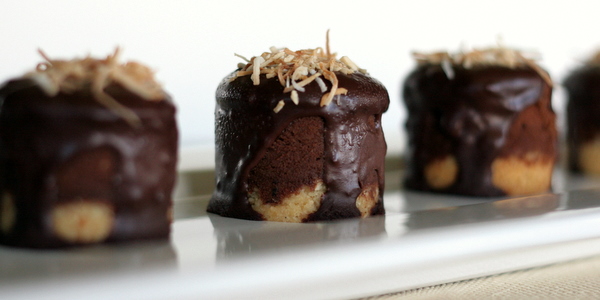


I ate so many Christmas cookies that my sweet tooth was appeased for two months. (That my pants wouldn’t button probably helped control my appetite.) When it returned this weekend with a nearly insatiable vengeance, I had one thing on my mind – those delicious Vosges truffles made with sweet Indian curry and toasted coconut. Ah, the Naga!
Instead of venturing out for my fix, I embraced Michael Pollan’s Food Rule #39: Eat all the junk food you want as long as you cook it yourself. So I set out to satisfy my craving by using what I had on hand. I love a good pantry raid almost as much as I love chocolate truffles.
These mini cakes are a bit fussy but worth it. The marriage of curry and chocolate is one of those transcendental food combinations that can’t be described – you just have to taste it. If you’re short on time, you can adapt the recipe* and make one, large cheesecake.
Sweet Curry Chocolate Cheesecakes
with Coconut and Chocolate Ganache
Ingredients
crust:
12 oz coconut shortbread (Substitute plain vanilla shortbread if you can’t find coconut.)
1/2 teaspoon ground cardamom
1/4 cup butter, melted
filling:
16 oz cream cheese
1/2 c. granulated sugar
2 T brandy
2 T heavy whipping cream
4 oz bittersweet chocolate, melted
3 egg yolks
1 whole egg
1/4 c. cocoa
1 T sweet curry powder
topping:
1 T butter
6 oz bittersweet chocolate, chopped
2/3 cup heavy whipping cream
1/2 cup unsweetened coconut
Equipment
2 mini cheesecake pans (If you only have one pan, bake the cakes in two batches. You can also bake some now; refrigerate the remaining ingredients; and bake the rest tomorrow. The filling will keep for a few days in the refrigerator.)
Preparation
crust:
- Using a food processor, turn the shortbread into coarse crumbs.
- Add cardamom and melted butter. Pulse to combine.
- Spoon 1 1/2 tablespoons of the crumbs into the bottom of each mini cheesecake cell.
- Using the blunt end of a wooden spoon or similar, tamp the crumbs until firmly and evenly compacted.
- Refrigerate until ready to fill.
filling:
- Preheat oven to 325°F.
- Add the cream cheese and sugar to a large bowl and mix on medium/high speed until fluffy, about 2-3 minutes.
- Add the remaining ingredients and beat until thoroughly combined.
- Spoon the mixture on top of the crumb crusts leaving about a 1/2″ between the top of the filling and the top of the pan.
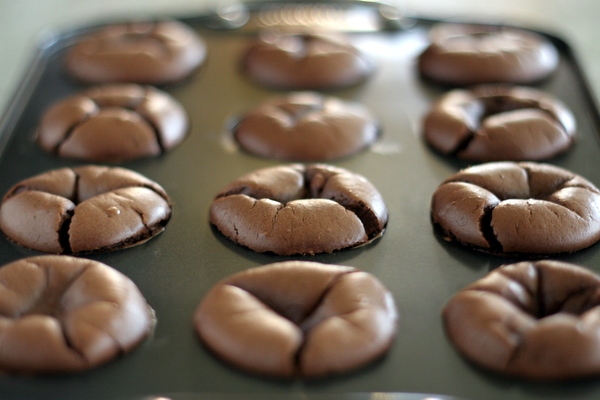
- Bake for 25 minutes or until the cheesecakes are firm to the touch. (They will puff up above the top of the pan and probably crack. Don’t fret, they will sink as they cool, and the ganache will hide any and all imperfections.)
- Remove the cakes from the oven and place on a wire rack to cool.
- Increase the oven temperature to 375°F.
topping:
- Spread the coconut on a baking sheet and place it in the oven. Bake until flakes are golden, about 5 minutes. Stir the coconut once or twice while it bakes.
- Combine the butter, remaining chocolate, and whipping cream in the top of a double boiler. Whisk until the chocolate is melted and the cream is fully incorporated. Set aside to cool and thicken slightly.
- In the meantime, carefully remove the cooled cheesecakes from the pans and place them on waxed paper.
- Spoon the room temperature ganache over the top of each cheesecake.
- Sprinkle with toasted coconut.
- Chill until ganache has set.
- Let the cakes come to room temperature before serving.
*Note: If you lack the pans or the patience for the minis, you can make a single cheesecake using a 7″ springform pan.






 Bob Vivant