No Such Thing As Luck and Mini Berry Pavlovas

Life has been good to me lately, very good. I’m grateful for the opportunity to write about it here, because I’m not always comfortable horn tooting to my friends. Listening and offering advice (yes, often unsolicited, sorry) and providing a shoulder to lean on comes more easily than sharing good news, bad days, or otherwise. I feel self conscious when I talk about myself and worry that others think I’m narcissistic or a braggart. Many of my friends are embroiled in family dramas, their pain so deep it shows on their lined faces. Do they want to hear about my upcoming trip to Italy? Or the Osprey nests we saw on another friend’s private island in Maine last week? Or what about the genuine bone-in Jamón Ibérico that’s perched in its “jamon holder” on my kitchen counter on loan from generous friends? Would my stories be a welcome distraction from a loveless marriage and parenting challenges? Or would the contrast in our life stations and emotional states exaggerate their pain? Does misery really love company? When I can’t answer these questions, my answer to their “How are you?” is short and sweet then I steer the conversation back to them.
But perhaps the biggest reason I’m reluctant to share good news with friends is that I can’t bear to hear the words, “You’re so lucky!”
“You’re so lucky you know how to make bread.”
“You’re so lucky to have a job you love.”
“I wish I could go to Italy. You’re so lucky!”
I’m not lucky. I don’t believe in luck.
Physics? Yes. “For every action, there is an equal and opposite reaction.” Thank you, Sir. Newton!
Karma? Absolutely. What goes around comes around. Eventually.
I also believe in hard work. Malcolm Gladwell suggested we need 10,000 hours in a subject to become an expert. Ultimately our successes, and failures too, are driven by the choices we make and the trade offs we’re willing to accept in life.
My bread is good; it’s true. I may not have 10,000 hours of breadmaking under my apron, but I made over 200 loaves of bread before I stopped counting. I have a job that I love, because I traded a fat paycheck for happiness, something I was only able to do because I had worked hard for the years leading up to my career change. We’re going to Italy instead of painting the exterior trim of our house, trim that was installed more than six years ago and has since sat unfinished. The trim can wait one more year, a trade off we both agreed to. I can’t say the same for Italy.
If you’ve stopped by here before, you know that my cosmic joker hasn’t always been kind. 2013 was a particularly tough year for Greg and me for reasons too painful to share here yet, even though it seems like I talk about anything here. In the darkest of those days I still believed that something good would be born from the bad, that we would find a silver lining. Our Italy trip is that silver lining. I believed it too when my dad died in my junior year of college, a sudden tragic event that brought me closer to the mom I’d worked so hard to distance myself from. And I believed it when I watched cancer slowly consume her eight years later. While mom slept, my sisters and I forged new bonds in her kitchen, getting to know each other again in the meaningful ways that you can’t with a monthly long distance phone call. Those silver linings were hard earned and had nothing to do with luck.
Lady Luck didn’t have a hand in these lovely pavlovas either. Suffice to say I am well on my way to 10,000 hours in the matter of pavlova baking. I made them for a gluten free wedding I catered earlier this month. My go-to moves for gluten free desserts involve chocolate, coconut, and/or nuts, but it’s July and a summery dessert was a must.
My first batch baked up flat. I didn’t get the egg whites stiff enough. My second batch was dark and brittle. They say the third time is the charm, but not for me. After two dozen egg whites and too much powdered sugar I still didn’t have a foolproof recipe and method, only a growing mound of sugary hockey pucks. I told myself it was time to move on and find another dessert. The clock was ticking, and I had countless other dishes left to prepare for a hundred plus guests. This isn’t the same as giving up, I told myself. I could return to Operation Pavlova after the wedding.
Failure, especially when repeated, is a humbling reminder of how much I still have to learn in life. It’s particularly hard to swallow when it’s dished up in my kitchen. “Maybe just one more try,” I said to my refrigerator as I reached for my last carton of eggs. At last my efforts were rewarded. Batch four was beautiful, light and crisp on the outside with a slight chew reminiscent of a marshmallow on the inside. There would be pavlovas at the wedding after all.
I’m making more again soon. If you’re lucky I’ll share some with you!


Mini Summer Berry Pavlovas with Vanilla Cream
Adapted from Nigella Lawson’s recipe. And for tips on how to perfect your pavlovas be sure to check out Nicky Major’s informative piece for Fine Cooking.
Ingredients
PAVLOVAS
-
8 large egg whites
1 pinch of salt
2 ½ cups powdered sugar
4 teaspoons cornstarch
2 teaspoons white wine vinegar
SAUCE
-
2 cups mixed berries, fresh or frozen
1/4 cup sugar (more depending on the sweetness of the berries)
Juice from half a lemon
FILLING
-
1 cup mascarpone cheese
1/4 cup heavy cream
3 tablespoons powdered sugar
Seeds from one vanilla bean (or 1 teaspoon vanilla extract)
TO FINISH
-
1 cup mixed berries, roughly chopped if large
Fresh mint leaves or tarragon
Preparation
- Preheat oven to 350°F. Line two large baking sheets with parchment paper or Silpats.
- Whisk together the egg whites and salt until very stiff and the whites start pulling away from the edge of the bowl–right before they break. Gently begin spooning in the sugar one tablespoon at a time. Go slowly. Keep beating until glossy, about 5 minutes. Sprinkle in cornstarch and vinegar. Blend on low until combined.
- Spoon a scant two tablespoons of meringue onto the baking sheet for each pavlova, placing them about an inch apart. (I used a #40 disher, which is about a 3/4 ounce ice cream scoop.) Make a small depression in the center with the back of the spoon.
- Put into the oven and immediately decrease the temperature to 275°F. Bake for 30 minutes until they’re dry to the touch with just a hint of ivory color. Turn off the heat and leave them in the oven with the door cracked for another 30 minutes. Remove the pavlovas from the oven. When completely cool seal in an airtight container. If it’s a particularly humid day and your meringues get sticky, dry them in a 225°F oven for 30 minutes.
(The meringues will keep for up to two weeks if sealed in an airtight container and stored in a cool, dry place.) - To make the sauce, pour the berries into a saucepan over medium heat. Stir in the sugar and lemon juice. Cook the mixture down until it reaches a sauce-like consistency, stirring occasionally. Let cool. Using a blender or food processor puree until smooth.
- For the filling, combine ingredients in a medium bowl and beat with an electric mixer until smooth.
- To assemble, place the meringues on a serving platter. Fill the centers with a generous dollop of vanilla cream. Spoon the berry sauce on top. Sprinkle with mixed berries and fresh mint or tarragon. Serve immediately.
Makes about 4 dozen.
Labels and Sea Salt Almond Crisps

I’m a fan of labels. The ones on my groceries alert me to the sneaky ways manufacturers add sugar to my food, along with a host of other questionable ingredients. Peek in my fridge, pantry, or basement larder, and you’ll see that I like to label my jars too. If you keep twenty plus varieties of flours and starches, it’s essential. However, when it comes to putting labels on my diet, I draw the line.
Paleo.
Vegan.
Omnivore.
Oh my!
Since I’m in the business of cooking with and for other people, these labels come up on a regular basis. It can be downright maddening, especially when food allergies and intolerances aren’t a factor. Many people wear these labels like badges of honor. Being gluten free is more fashionable than skinny jeans these days.
Well, like them or not, for the past thirty days I’ve been a “Paleo.” (Specifically, we’re following the Whole 30 elimination diet program described in the book It Starts with Food.) Worse still, I was a teetotalling, sugar-snubbing Paleo. Despite my firm belief in Julia Child’s mantra of “Everything in moderation, including moderation,” I was THAT GIRL—the one that can drive any well-intentioned host crazy.
“No thanks, I’m fine with water.”
“Is there cream in that?”
“Sorry, I can’t eat that.”
(To the gracious hosts who have tolerated me these last few weeks, I bid you a heartfelt thank you.)
If having special dietary requirements is hard on a host, it can be even harder for the guest. Memorial Day weekend in Toronto I watched my friends Lauren and Jeanel gleefully share an eighteen month Manchego cheese served with housemade sourdough bread. “Don’t let me stop you,” I insisted. Everywhere we ate, I was adamant that they order what they wanted and not cater to my restrictions. And I meant it…until I saw that beautiful cheese. They also shared some delicious looking desserts that weekend, but those didn’t call to me the way that cheese did or the perfect croissant Lauren enjoyed the next morning at a quaint French bistro. Delicate golden flakes fell to her plate as she ate, flakes that I wanted to lick up right then and there etiquette be damned.
Those temptations aside, giving up sugar, booze, legumes, grains, and dairy was easier than I expected. There’s a simplicity that comes with so many limitations. On nights when I can eat anything, I often twirl about my kitchen unable to decide what I want to cook for dinner. For the last thirty days I’ve channeled that energy into culinary creativity. My new spiralizer got a workout, turning zucchinis into noodles (Greg’s favorite) and cucumbers into pretty ribbons. My green bean Frencher—a 2012 impulse buy that was still in its box—also made its way into my gadget rotation with a lovely green bean and chicken salad inspired by one with potatoes at Bon Appetit. I made my first ever grain-free bread—coconut almond, which we love so much it will be a staple around here even when grains are no longer off limits. Same goes for the addictive little almond crisps featured here. They are a perfect mate for creamy Gorgonzola and a spoonful of fig jam. Dining out was easier too. When eighty percent of the menu is off limits, decision making is a breeze.
Maybe it’s my aversion to diets and dietary restrictions, or maybe it’s my unwavering allegiance to peanut butter and pizza, but I secretly hoped that I wouldn’t feel any different being on the Whole 30 bandwagon. After all, we were already what most people consider “healthy eaters.” The truth is we both experienced positive changes. In one week we were sleeping better than we have in years. YEARS. The dark circles under my eyes require little to no makeup now. And Greg says that my eyes aren’t as puffy either, a condition he neglected to mention previously. He had a particularly sluggish first week at the gym, but by week two his workout energy levels had returned and his overall energy level throughout the day was noticeably more balanced. Best of all, his tummy has been trouble free. My fingers were crossed that the program, which is largely founded on anti-inflammatory principles, would speed the healing of my three month hamstring injury. The jury is out on this one. The pain in my butt has diminished significantly, however I can’t be sure if it’s Whole 30 or the simple passing of time and letting the tendons rest.
This week we started the reintroduction phase, adding back one food group at a time in isolation and observing their effects. We started with dairy: homemade vanilla bean ice cream and the creamy gorgonzola cheese that we schmeared on these crackers. “Go hard or go home,” my niece Kate texted in reply to my menu plans. We washed it all down with our first mojitos of the year. There is no formal plan for reintroducing sugar and alcohol. You’re strongly encouraged to limit both, now and forever, though that didn’t stop the muddling of simple syrup, limes, and mint from our garden. The next morning Greg felt fine. And I was completely bloated and crestfallen. I wasn’t in pain, just uncomfortable. We blamed the cow and not the white rum, though arguably more research is needed on both counts. I’m hopeful that the reintroduction of grains will go better than dairy for me, and that we’ll soon be enjoying pizza again. It will take more than a bloated belly to keep me away from my beloved cheese, but I might eat a little less now. And there is talk of making pizza every other week instead of weekly, but rest assured, that’s just talk for now.
It’s hard to argue with the solid nights of sleep we’ve been enjoying for a month and the added pep in our step first thing in the morning. So, many of the changes we’ve made to our diet will be permanent even as we return to our “Everything in Moderation” way of eating. Less wine. Less sugar. Less cream. Less cheese. More coconut milk, nuts, and eggs. And more La Croix. But as of now we’re done with labels.
Sea Salt Almond Crisps
Ingredients
-
2 cups unblanched almond meal
2 tablespoons water
1 tablespoon olive oil
1 egg white (2 tablespoons)
3/4 teaspoon sea salt
flaky sea salt to finish (Maldon is my favorite.)
Preparation
- Preheat oven to 350°F.
- Put the almond meal in a medium-sized bowl and make a well in the center.
- In a small bowl whisk together the water, olive oil, egg white, and sea salt. Add the wet ingredients to the almond meal and stir to thoroughly combine.
- Between two sheets of parchment paper or two Silpats, roll the dough out into a large rectangle an 1/8-inch thick or a little thinner. Sprinkle with sea salt. Gently roll the dough once more to press the salt into the dough.
- Using a pastry cutter or knife cut the dough into any shapes you like. Take care if you are cutting them directly on a Silpat. Transfer the crackers to a large baking sheet. Bake for 15-17 minutes or until lightly toasted looking on top. Don’t fret if they are slightly soft when you remove them from the oven; they will crisp as they cool.
- Allow crackers to cool on the sheet for five minutes then remove to a wire rack. Store leftovers in an airtight container.
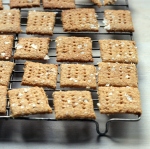 Bit by the DIY cracker bug? Try these whole wheat crackers.
Healing and Melted Tomato Bruschetta

The colorful treasure above is my new favorite appetizer. Creamy, garlicky ricotta smeared on a lightly toasted slice of bread that’s crunchy on the outside with a bit of chew on the inside when the crisp shell gives way. Even though it’s only May here in Chicago and fresh tomatoes are yet the stuff only ravenous dreams are made of, roasted tomatoes with their bright sweetness are satisfying enough to tide me over until August. These gems are from last year’s harvest (The recipe link below will explain how I’ve managed to preserve them all these months.), but roasting tomatoes is also a great way to breathe life into a pint of store-bought cherries this time of year. And unless you are exceedingly patient, which Greg tells me I’m not, you won’t want to wait until August to try this recipe.
As delicious as this bruschetta is—if the fact that I’ve made it three times in as many weeks tells you anything—I’ve sworn it off, along with an extensive list of my favorite foods. Last week we took a thirty day pledge to go without dairy, sugar, grains, legumes, and alcohol. Specific to me this means, no Friday pizza night, no Saturday night popcorn with Saturday Night Live, no creamy Gorgonzola on a raisin crisp, no sipping wine while I cook dinner, and no peanut butter toast at breakfast. Greg shares my pain especially when it comes to pizza though he can take or leave the booze. His biggest craving is for sweets. In past attempts to give up sugar, he hasn’t lasted a week.
We have been dancing around the notion of an elimination diet (give up certain foods for an extended period of time, then slowly reintroduce them into your diet and observe how your body responds to them) for months now. My innards are likely constructed of cast iron, but Greg’s not so lucky. We often play the game of “what did you eat” when he’s stricken at 2AM with tummy trouble. We’re already following a doctor prescribed anti-inflammatory diet as a means of managing Greg’s genetically derived high cholesterol. Last year his doctor asked him to limit dairy, wheat, and processed sugar, not give them up entirely. There is a big difference between limit and eliminate, like the difference between having pizza on Friday night and, gasp, not having pizza on Friday night.
Then last month my eldest niece Kate sent me this text, “Have you read It Starts With Food? It’s right up your alley.” The answer was no. I’d never even heard of the book, but the trap was set. My whole life starts—and ends—with food. Besides, anytime someone I admire says something is up my alley, they have my full attention. The book, which I immediately purchased after our text exchange, outlines the Whole 30 challenge and describes how the food groups you’re eliminating affect the body. It’s chock full of research that makes sense to me, having spent the last year collaborating with a nutritionist for Conscious Crumbs cooking lessons. Testimonials are sprinkled amidst the data, but all it took was one to spring the trap. Dallas Hartwig, a nutritionist and trainer and one of the book’s co-authors, had suffered for nearly two years from chronic tendonitis in his shoulder. He tried everything with little to no success. Then he changed his diet as a means of limiting the inflammation, specifically giving up legumes. Six weeks later his shoulder was healed.
For two months I’ve been battling proximal hamstring tendinopathy (PHT), an uncommon sports injury likely brought on by treadmill running and pulling off my snow boots. (Thanks again Old Man Winter!) In layman’s terms PHT means that the common origination point of my three hamstring muscles is inflamed or more simply, I have an excruciating pain in my butt. Running is out and so is yoga, even walking and sitting are painful. The cases with the shortest recovery time (3-6 months) are the ones where the person did nothing outside of physical therapy. NOTHING. (I could insert three more paragraphs here describing what this is doing to my mental state, but I will spare you.) Could a change in my diet really be the answer?
Greg and I spent our Sunday morning mulling it over while noshing on Gruyere covered eggs and toast slathered in raspberry jam. My pizza loving, sugar craving husband was the first to say, “let’s do it.” Even with my pain, I was a little slower to come around. The program flies directly in the face of my, well, Julia Child’s really, credo, “Everything in moderation, including moderation.” But thirty days isn’t forever, so I agreed. I grabbed my phone and texted Kate, “I’m in! And so is Greg.”
Breakfasts are easy: smoothies with a mix of fruit, kale, and cashews or almond butter or veggie frittatas hold the cheese. Greg loves leftovers and is happy to have last night’s dinner for today’s lunch, while I’m having a giant salad loaded with tuna, olives, and artichoke hearts. Dinner and the limitation on legumes has been the biggest challenge so far. We aren’t big meat eaters, and beans and lentils provide much of our protein requirements. With my go-to, in a hurry move of beans and garlicky greens off the table, our dinners require more advance planning. I’m reaching for different cookbooks, revisiting past issues of Bon Appetit and Saveur, and loving every minute of the creative process so much that I almost don’t miss my glass of wine while I cook: Scallops with Carrot Coconut Curry Sauce, Prosciutto Wrapped Chicken with Cashew Pesto, Spaghetti Squash with Chorizo and Chili Glazed Mushrooms, and Roasted Butternut Squash with Eggplant and Tahini Sauce. Alas, we’re not exactly suffering here.
Five days in we’re both sleeping noticeably better than we have in a very long time. We’re also lacking the energy we had a week ago, something the book told us to expect in the first week as our bodies re-calibrate and adjust to new fuel sources. The most fascinating part for me so far relates to the psychological aspects, the noticeable differences between a habit—a glass of wine while I cook, a craving—Greg squirming in his chair after dinner because he can’t reach for a piece of chocolate, and real hunger. We’re learning a lot about our bodies, and almost as much about our minds. As for my butt, well, it still hurts.
Kicking our cravings and habits to the curb will take longer than a week. I want to peel that bruschetta above right off my monitor and sink my teeth into it, but Whole 30 is an all or nothing program—no cheat days, no exceptions. And when it’s over, I will have to wait a bit longer before I slather up my toasts with silky ricotta. Food groups must be reintroduced slowly and one at a time: dairy first, grains with gluten four days later, followed by non-gluten grains, and finally legumes on day ten. But if giving up wine and pizza for a month or more means that I’ll be strapping on my running shoes by the time the summer solstice arrives, then it’s all worth it.
Melted Tomato Bruschetta with Roasted Garlic Ricotta
Ingredients
- MELTED TOMATOES
8 large garlic cloves, peeled
olive oil
1 cup whole milk ricotta cheese
sea salt
freshly ground black pepper
18, 3/8-inch thick baguette slices
Preparation
- To roast the garlic: heat oven to 375°F. Put garlic cloves in the center of a piece of heavy-duty aluminum foil. Generously drizzle with olive oil and sprinkle with salt. Fold up the foil packet and seal tightly. Bake for about 45-60 minutes or until the garlic is soft.
- In a small bowl, mash the roasted garlic cloves until a paste forms. Add the ricotta and mix until thoroughly combined. Season to taste with sea salt and black pepper. Refrigerate until ready to assemble bruschetta.
- To toast bread: preheat a stove-top griddle or grill pan on medium-high heat. Brush both sides of the sliced bread with olive oil and grill until golden, about 1 to 2 minutes. (Or place on a cookie sheet and bake at 350°F until lightly brown, about 8-10 minutes. Remove and let cool.)
- Generously slather ricotta mixture on each toast. Top with a spoonful of melted tomatoes. Drizzle with olive oil. Serve at room temperature or warm in oven at 350°F for 5-7 minutes. Sprinkle with fresh basil immediately before serving.
Makes 18 bruschetta.
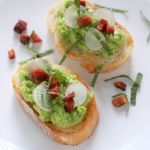 Here’s my other favorite spring, crunchy toast topper: Sweet Pea Crostini with Crispy Pancetta
In Search of Wisdom and Coconut Vanilla Bean Ice Cream

God, grant me the serenity to accept the things I cannot change,
The courage to change the things I can,
And the wisdom to know the difference.
I recite this–the Serenity Prayer—daily, often many times each day. The last line often provides the biggest challenge.
Prayer and meditation in various forms are a regular part of my life though I’m not particularly religious; something six years of Catholic schooling didn’t change. Dad never went to church. He was likely agnostic for all I knew. It wasn’t something we talked about. When I entered my twenties and answers to those kinds of questions started to matter, he was dead. Mom was Catholic, the go to church for Christmas and Easter variety. In spite of or maybe because of her reluctance to be a Sunday mass regular, she made me go. On nice days I’d spend the hour at the playground near the church swinging from the monkey bars in my skirt and ruffled bobby socks. When the church bells tolled it was time to go. Then I’d sneak in the side door of the church and grab a bulletin from the table at the back—the requisite proof of attendance that mom would demand when I returned home. Some days I’d forgo the charade, embracing the peacefulness that the big stone church with its enormous vibrant glass windows offered instead. Father Leon’s gentle voice punctuated with the low murmur of “Amen” was a stark contrast to the soundtrack of barking dogs and shouting matches at home. I sat in the back pew where I couldn’t feel the pitying glances of parishioners who wondered why a young girl was sitting in church alone.
As an adult when peaceful moments were easier to come by, I stopped going to church. The communal aspects never appealed to me, not as a child, not as a grown woman. My backyard is my favorite place of worship today. I can find spirit in a single daffodil, blooming where snow fell only the day before. I can also find it in that first sweet creamy spoonful of homespun ice cream. Spirit is with me when I feel Greg’s hand in mine on an early morning walk. Or when my god daughter wraps her tiny arms around my neck and whispers, “Aunt Bobbi can I have some lip gloss?”
Lately I’ve been praying more than usual. It happens when life’s current lesson isn’t obvious and my purpose grows a little fuzzy and recedes a bit into the distance for only God and my cosmic joker to see. I’m moving forward but it feels like I’m pushing a boulder uphill. History has shown me that I’ll reach the top eventually without being crushed under the rock. It’s also taught me that more valleys and mountains will await me after I do. My spiritual teachers Eckhart Tolle and Eknath Easwaran would remind me to focus on the rock, the moment, now. The past, both mistakes and triumphs, and the future—that mountain top view—exist only in my head, taking up residence with the gremlins there that say, “You can’t do this. You won’t do this.” My heart grows heavy when the voices are loud. Before I succumb to the role of victim and reply, “Why me?” I must remember that I give them the power to run amok in my monkey brain, and only I can take that power away. Sometimes in prayer I find this strength. And sometimes the voices just get louder. In those moments I always return to the Serenity Prayer, desperate to find that line between casting my ego aside and surrendering to spirit–to accept the things I cannot change, and taking action–to change the things I can.
The wisdom to know the difference is often what eludes me. Where is the line between surrendering and copping out? Between taking action and trying to control something that I’m not meant to control? Navigating the space in between requires every bit of patience I can muster. It’s also where I know I’ll eventually find grace. And so I shift my focus away from the blurry future (and a second bowl of coconut ice cream!) and back to my rock and the earth beneath my feet.
Coconut Vanilla Bean Ice Cream
This is the vegan ice cream recipe I promised you in my last post. It’s become a freezer staple over the last month. We topped our last batch with chocolate sauce and toasted coconut–like a Mounds Bar all grown up and more delicious. Play around with the amount of sugar if it’s not sweet enough for your liking. If it’s too sweet the coconut flavor is less pronounced.
Ingredients
-
2 cans coconut milk
4 teaspoons cornstarch
2/3 cup granulated sugar
1 vanilla bean
Preparation
- In a small bowl whisk together a little coconut milk and the cornstarch to create a slurry.
- Combine the remaining coconut milk and granulated sugar in a sauce pan over medium heat. Split the vanilla bean lengthwise and scrape out the seeds. Add the bean and seeds to the pan. Whisk in the cornstarch mixture. Bring to a gentle boil and whisk for 2-3 minutes until the mixture thickens slightly.
- Let cool then chill mixture thoroughly in the refrigerator for at least two hours or overnight.
- Freeze in your ice-cream maker according to the manufacturer’s instructions.
A Vegan Dinner Party and Cherry Berry Crumble

I love butter, preferably salted, melted into the nooks and crannies of a piece of toasted brioche.
Then there’s cheese: cow milk, goat, or sheep—I don’t discriminate. If forced to choose between butter and cheese when I’m packing my bags for exile to an uninhabited island, it’s hard to say which I’d choose to live without. For now, I’m grateful that such a conundrum is pure fiction. In fact, as awareness of food allergies and intolerances grows at a record pace, there’s much, much more that I’m grateful for when it comes to my food: I can, and gleefully do, eat just about anything except for green peppers and Jello.
So why am I checking in with a vegan dessert? It’s not because I ran out of butter or eggs. That, I can assure you, never happens around here. The first and perhaps most important reason is that it’s darn tasty. In fact, if I hadn’t mentioned the “V” word, you might reach the bottom of your bowl of Cherry Berry Crumble without even realizing that you’d just fallen hard for a vegan dessert. The second reason that rivals the first in importance is that one of my favorite oh-so-omnivore clients recently embarked on a vegan journey, and this week she’s hosting her first all vegan dinner party.
The dinner is an annual event. Last year it was creamy asparagus soup, lemon herb chicken thighs, and potato gratin. And please don’t forget the cheese course. I know I won’t–triple cream St. Andre, smooth Ossau-iraty, nom, nom, nom. This year, hold the meat and fish, the butter, the cream, the eggs, and the cheese. Vegetables are more interesting to me than meat especially chicken on any given day. The hard part is doing without eggs and dairy accompaniments. There are a lot of vegan friendly products that mimic foods like butter and cheese, but I can hardly tout the benefits of “real” food, while I’m cooking with a butter “spread” made from eleven ingredients one of which is pea protein. What is that?
Then I started leafing through my favorite vegetarian dinner menus and realized how many of them included vegan dishes or ones that were darn near it and would require only minimal tweaking. There will be a spinach and roasted garlic soup, zucchini fritters with avocado cream and red pepper coulis, wild mushroom and asparagus risotto, cauliflower steaks with gremolata panko, and haricot vert with basil pistou and roasted tomatoes. All made without pea protein. Whew!
Dessert posed the biggest challenge. Did I mention that pie, apple pie with a perfect, flaky crust, is the signature dessert of this favorite client? She pulled it from a warm oven for last year’s dinner. The guests swooned at the sight of it and left nary a crumb on their plates. The experiments started in earnest ten days ago with avocado chocolate mousse and olive oil cake. They proved to be solid contenders, but this fruit forward crumble was the clear winner. If you like your crisps, crumbles, and cobblers served a la mode and you’re not following a vegan diet, a vanilla bean ice cream sidecar is a no-brainer here. And if you are following a vegan regimen, hang tight until my next post, which will include the recipe for an equally satisfying coconut milk ice cream.
Just So Happens to Be Vegan Cherry Berry Crumble
Ingredients
FILLING
(You can use fresh or frozen fruit.*)
-
1 1/2 cups blueberries
1 1/2 cups blackberries
1 1/2 cups sweet black cherries
2 tablespoons unbleached all-purpose flour
1/4 cup pure maple syrup
TOPPING
-
1/4 cup vegetable oil or coconut oil, melted
3 tablespoons brown sugar
1 teaspoon vanilla extract
1 1/2 cups old-fashioned rolled oats
1/3 cup sliced almonds (optional)
1/2 cup all-purpose flour
1 teaspoon cinnamon
1/2 teaspoon freshly grated nutmeg
1/8 teaspoon ground cloves
1/2 teaspoon sea salt
Preparation
- Preheat oven to 350°F.
- In a medium bowl, combine the berries, cherries, flour, and maple syrup.
- In a small bowl whisk together the oil, brown sugar, and vanilla. Combine the remaining topping ingredients in a larger bowl. Add the wet ingredients to the dry ones and blend with a fork.
- Spoon the fruit into an 8×8-inch baking dish. Sprinkle the oat mixture evenly over the top. Bake for 35 minutes, or until bubbly and golden brown. (*Increase the baking time if you’re using frozen fruit.)
Kitchen Essentials and Coconut Curry Cashews

“What are your kitchen must-haves?”
From earnest bachelorettes to moms out for an overdue girl’s night out to corporate executives bringing together their staff for a team-building event, this is the number one question I’m asked at my Conscious Crumbs cooking parties. When I do in-home, private lessons I emphasize doing what you can with what you have, intent on cultivating culinary MacGyvers rather than filling cabinets with unnecessary equipment. Still, they press me for what to buy or register for. Now I keep a kitchen essentials list on Amazon, but I share it cautiously, reminding eager cooks and bakers that they don’t need everything on the list to enjoy time in their kitchens and prepare satisfying dishes.
For me cooking is more than the utensils, gadgets, and appliances that overload my cupboards and drawers. (Even though I shudder at the thought of slicing five pounds of cucumbers for a crudités platter without my mandoline.) Time in my kitchen is a crisp Albarino wine to sip from a delicate stemmed glass while I mince garlic. It’s a white pillar candle (unscented, please) casting a warm glow in the evening over my prep area. Tonight it’s shaking my hips to Gary Clark Jr. while I stir a burbling pot of mushroom risotto. Tomorrow Lynne Rossetto Kasper’s guest chefs on The Splendid Table will transport me to the bustling streets of Thailand in one segment, then instruct me on the finer points of massaging kale in the next.
Cooking is waiting for a text from Greg letting me know that he’s on his way home. It’s a brand new, ice-cold cookbook rescued from our snow-covered porch. Or Penny De Los Santos‘s latest pics on Instagram. It’s the bell that chimes from my trusty toaster oven where fragrant hazelnuts are toasting. White plates are warming on top, a blank canvas ready to be dressed with my latest culinary experiment. Thoughtfully arranged plates will soon sit next to mismatched, unpolished antique silverware collected from local thrift shops. Each fork and knife tells a different story, their settings ranging from British passenger liners to 19th century luxury hotel dining rooms. It’s dimming the lights, always too low for Greg who claims that I was a mole in a previous life. His wine glass joins mine at our small table where we’ll linger as long as time allows. Then it’s time for a little hip-hop while we scour pans and fire up the dishwasher. These are my real kitchen essentials, because they allow me to feed the ones I love and feed my soul.
What are your kitchen must-haves?
Roasted Coconut Curry Cashews
Cashews, curry, and coconut. It just might be my favorite flavor combination–in sweets and in savories. Speaking of the sweet variety, my food blogger friend at saltandserenity.com makes a delicious coconut curry cashew that’s reminiscent of a nut brittle. They are equally addictive.
Ingredients
-
1 large egg white
1 1/2 teaspoons sea salt (less if using salted nuts)
1/4 teaspoon cayenne pepper (More if you like spicy foods)
1 tablespoon curry powder
2 tablespoons organic cane sugar
1/4 cup unsweetened coconut, finely shredded
2 cups cashews (Peanuts are tasty too.)
Preparation
- Preheat oven to 300°F. Line a rimmed baking sheet with parchment paper.
- In a medium bowl, beat the egg white with a small whisk until foamy. Whisk in salt, spices, sugar, and coconut. Stir in the nuts.
- Spread the nuts in a single layer on the baking sheet. Bake for 15 minutes. Stir. Return to the oven and bake until golden, about 15-20 minutes.
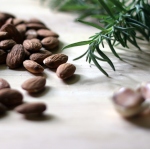
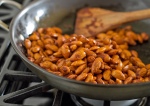 Not a fan of cashews? Try these recipes for roasted almonds: Rosemary Almonds or Smoky Sriracha Almonds.
Talk About the Weather and Spinach Feta Roulades

-2 degrees Fahrenheit. Minus two for God’s sake!
That’s what the temperature was when I sat down to write. My fingers, still cold from shoveling today’s freshest snow, are behaving as if they have forgotten where the computer keys are, each stroke awkward and tentative. I’d planned to share my current culinary obsession with you: roulades. (Roulade is derived from the French word “rouler” meaning “to roll”. Loosely, it refers to something flat and edible—meat, sponge cake, omelet–that is wrapped, or rolled, around a filling. It’s also a rapid succession of notes sung to a single syllable. I’d never heard of either, the food wrap or the musical embellishment, until last month.) There are so many things you can make out of and into roulades that it would make for a fine story on its own. But it’s below zero just outside the window where I’m writing from, five degrees warmer than it was when I reluctantly crawled out of our warm bed, and according to the overly smug weatherman on the local channel, this is today’s high.
I’m not one to go on about the weather. When we engage in conversation I usually skip over the “some drought we’re having ain’t it?” and the “can you believe it’s been raining for three straight days?” in favor of a more intimate conversation. The weather is just scratching the surface. It’s one impersonal step past “How are you?” “How’s it going?” and “How ya doin’”, the popular questions typically asked out of habit rather than curiosity or concern where the inquirer is out of earshot by the time the responder issues forth their “very well” or “good, thanks” . (According to Grammar Girl at quickanddirtytips.com it’s perfectly acceptable to say, “I’m good.”)
It’s like this, I seldom see you face to face. These days scheduling a date to meet for coffee must be done three weeks in advance. So when we finally get together I don’t want to waste time on the weather. I want to ask, “How are you doing?” and this time with feeling. “How is the job hunt going?” “Are you taking care of yourself?” If I were an avid Facebook user I’d know the answer to some of these questions, and I could have “liked” your status update regarding your dad’s recent bout with kidney stones. Regrettably that sense of connection available anytime at my finger tips often leaves me feeling completely disconnected.
Besides, when it comes to the weather, I’m all talked out. Daisy the cashier and I talked about it while she rang up my groceries, all eight bags of them. It’s all our mail carrier (who most people will agree has the worst job ever this season), can talk about, and who could blame her. The guy at the gym that wheezes on the treadmill next to mine might wheeze less if he didn’t talk about the weather or anything for that matter while he was running. Even the stranger on the train this morning gave it airtime, a particularly unusual conversation for a man without a hat or gloves and wearing only a lightweight leather jacket.
But here’s the thing, I can’t not talk about the weather, because it no longer plays a background role in my life; it overshadows everything I do or don’t do. Fashion decisions from the ankle up are impossible, layer after layer after layer. (There’s only one choice for the shoes: my Sorel “Joan of the Arctic” boots. It seemed like a comical even dramatic name for a pair of boots when I bought them last winter; I’m not laughing now.) Cooking classes have been cancelled due to icy road conditions. Tonight’s dinner plans with friends, months in the making, postponed because no one wants to venture out unless it’s absolutely necessary.
Still, I have to go out again to finish shoveling the snow. I pile on more layers and grab the shovel, its blue plastic edge frayed from overuse. People trudge past unrecognizable to me with only ten square inches of flesh showing and ice crystals twinkling on their downward gazing lashes. It’s too cold for conversation. They press on. If there was a “How’s it going?” in their wake, it was muted under their woolen layers. In spite of my craving for real, live social connection I hurry too. Back in the house, I pull off my boots, slip into shearling-lined moccasins, and twirl my scarf from around my neck like a roulade coming undone.
The phone rings as I’m hanging up the last of my arctic gear. I race to answer it—the outside world is calling. The voice, so familiar, it warms me instantly. I grab a blanket and curl up on the couch, settling in for a long overdue conversation with a friend. It’s our consolation prize for the cancelled dinner plans. We have a lot of ground to cover: the holidays, a recent trip to Nashville, and such, but first we have to talk about the weather.
Spinach Roulades with Feta Cream and Roasted Red Peppers
Ingredients
Ingredients
ROULADE
-
12 cups spinach
3 eggs
1 teaspoon salt
FILLING
-
8 ounces feta cheese
heavy cream or milk
2 tablespoons freshly chopped herbs such as basil, parsley, dill, mint, chives (optional)
salt, black pepper
2 sweet red peppers, roasted, skinned and cut into 1/4-inch strips (You can substitute canned peppers.)
Preparation
- Preheat oven to 400°F. Line a 14×10-inch jelly roll pan with buttered parchment paper.
- Bring a pan of water to a boil and add spinach. When the water returns to a boil, drain and rinse the spinach in cold water. Squeeze spinach dry with hands. Place spinach, eggs, salt, pepper, and nutmeg in a food processor or blender; pulse to a smooth puree. Spread spinach mixture into the prepared tray. Bake until set, 9-11 minutes. Lift the baked spinach off the pan and let it cool.
- For filling, combine cheese, 3 tablespoons cream or milk, and herbs until the mixture is smooth and spreadable with the consistency of peanut butter, adding more cream if necessary. Add salt and pepper to taste.
- Cut roulade in half crosswise so you have two, 7×10-inch pieces. Peel the baked spinach off the tray lining paper. Place each half on a piece on plastic wrap. Spread filling evenly over both halves, to within about a ½-inch of the edges. Cover each with a layer of red pepper slices. Roll up each roulade half from the long edge. Wrap in plastic wrap, twisting the ends to secure. Refrigerate the rolls 2 hours or until ready to serve.
- Unwrap. Trim the ends of both roulades. Cut each into 10 slices. Serve chilled or at room temperature.
Makes 20 hors d’oeuvres.
Tub Frosting and Blueberry Pecan Biscotti

What makes you angry?
What really sets you off?
I don’t mean irritated or agitated or annoyed. I mean what triggers an endless chorus of rapid fire expletives or a slam session where no door in your house goes untouched. I burned off most of my explosive anger in my 20s thanks to a love of long distance running and a long term relationship with a Jungian psychologist whose name rhymes with vulva. These days my anger is less like a 0-60 eruption and more like a slow simmering pot of stock, carefully managed to prevent boiling. So imagine my surprise when a little matter like store-bought frosting sent me over the edge in the midst of a Thai food lunch with a friend, a very good friend, the kind of friend that listens, counsels, and seldom, if ever, infuriates me. In a casual conversation she described the birthday cake her eight-year-old (and down-right adorable if you’ll pardon the bias) daughter wanted to make, including the purple frosting—a tub of store-bought, purple frosting.
The look on my face likely said it all, but my fork fell with a clank onto my plate of pad see ew and I opened my mouth anyway to deliver my judgmental, visceral, and of course, unsolicited response, “What? You can’t use tub frosting? Do you know what’s in that s#@&? And how easy it is to make frosting from scratch?”
We were both stunned. It bears repeating that this is a very good friend.
I’m a militant label reader, favoring real foods made with ingredients my Gram would recognize. Still, I reserve my soapbox appeals for vile things that are consumed regularly like Pop Tarts and Lunchables. If it’s something you eat on a special occasion—and a birthday certainly qualifies as such, screw the label, just enjoy it. So why the outrage then? I wondered as I slunk back home already at work on my apology.
The ingredients in store-bought frosting, while unsavory, had little to do with my reaction. As I peeled back another layer of the onion that is my psyche, I saw that it had everything to do with the connection between a mother and a daughter. My collection of warm childhood memories is small, and I guard them like the Crown Jewels. The best memories were made in our tattered kitchen from simple things like homemade frosting. Butter + sugar + cream + vanilla. We never used a recipe. I worked the hand-held mixer, mindful of not making it rain powdered sugar across the kitchen. Mom would peek over my shoulder and with only a glance she knew—a little more sugar, a bit more cream, adjusting back and forth until billowy, satiny frosting filled the bowl. There was a bonus round if I got to transform the white wonder into a colorful frosting, swirling in drops of food coloring. The best part? Licking the sweet beaters until they looked nearly clean enough to be returned to the drawer. In time I knew too and could make the “bit of this” and “dash of that” adjustments without mom’s watchful eye. Strangely this, all of this, the grit of the powdered sugar on my teeth when it’s not fully dissolved in the butter, the swirls of red food coloring, the bright white yielding to pink, and the feel of my tongue on the grooves of the beaters were locked away for safekeeping in a dark corner of my brain until the words “tub frosting” unleashed them.
My apology was accepted (Thank you again E!), and I was invited to give a sweet little birthday girl her first homemade frosting lesson. A little more powdered sugar. A splash of cream. Lots and lots of red and blue food coloring and a bit of patience as we waited for a vibrant purple to emerge from the bowl. I stood over her shoulder as my mom had over mine, forging a memory almost as sweet as the one I carry with me from my childhood.

Blueberry Pecan Biscotti
This recipe was adapted from Alice Water’s biscotti recipe in The Art of Simple Food. I prefer the texture of biscotti made without butter. They’re a bit more brittle and can withstand a generous swirl or two in my morning coffee.
Ingredients
-
1 1/4 cups pecans, lightly toasted and roughly chopped
2 1/4 cups all-purpose flour
1 teaspoon baking powder
1/2 teaspoon salt
3 eggs
1 cup sugar
1 cup dried blueberries (Dried tart cherries are nice too.)
white chocolate (optional)
Preparation
- Preheat the oven to 350°F. Line a large baking sheet with parchment paper or a silicon baking mat.
- In a medium bowl whisk together the flour, baking powder, and salt. In a large bowl, beat the eggs and sugar until the mixture is silky. Add the flour mixture to the egg mixture and stir until just incorporated. Gently fold in the pecans and dried fruit.
- On the prepared baking sheet, form the dough into two, 3-inch-wide loaves, about three inches apart. Wet your hands with a little water to keep the dough from sticking to you. Bake the loaves until lightly golden, about 25-30 minutes. Remove the loaves from the oven and let cool for ten minutes.
- Lower the oven temperature to 300°F. Slice the loaves into 1/2-inch-thick cookies and place cut side down on two baking sheets. Bake for ten minutes, flip the cookies over, and bake for ten more minutes.
- When the cookies are completely cool, dip in or drizzle with melted white chocolate, if using.
Makes about 3 dozen.





 Bob Vivant